14 Days Journey to GEO – Day 2
14 Days Journey to GEO - Day 2 Yesterday, you began ...


TL;DR
Generative Engine Optimization for Beauty Clinics (GEO) is the practice of structuring a medspa or clinic’s online presence so AI tools like ChatGPT, Google AI Overviews, Perplexity, and Gemini can understand, trust, and recommend the business by name when a prospective client asks questions like “what’s the best clinic for microneedling near me?” It builds on traditional SEO, but shifts the primary goal from ranking a link to becoming the cited answer. The fastest wins are using direct-answer formatting, displaying verified practitioner credentials, writing question-based headlines, maintaining NAP consistency across directory profiles, and adding detailed FAQ schema.
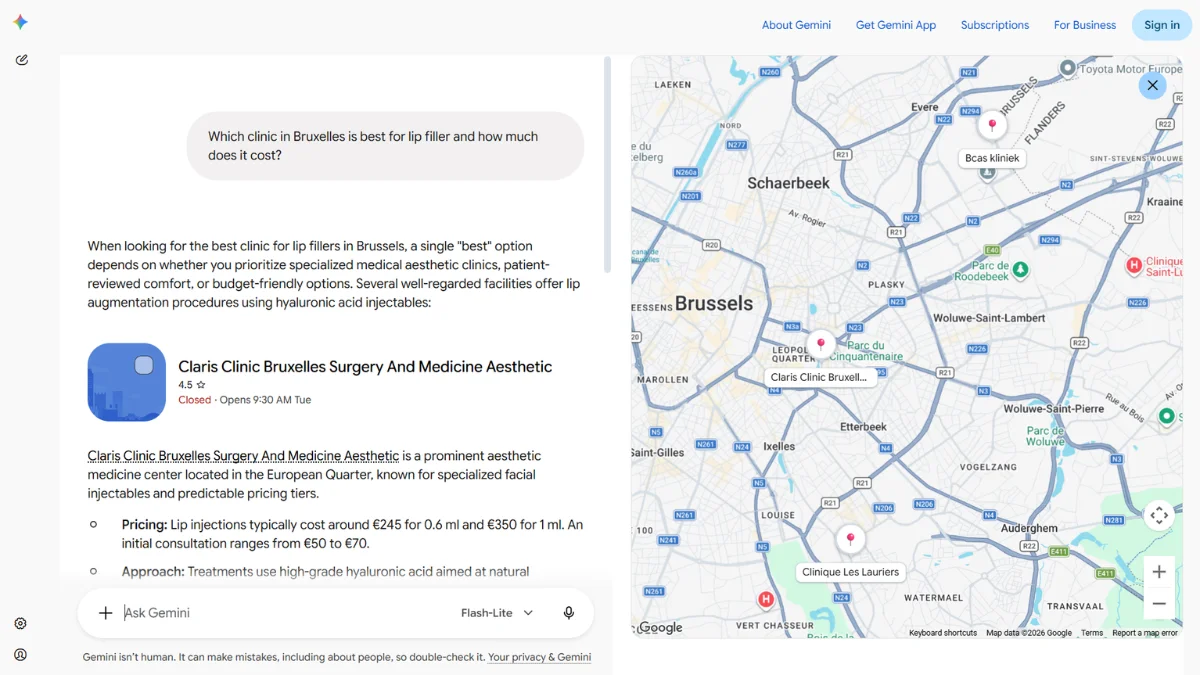
Clients no longer type “botox clinic near me” into Google and scroll through ten blue links. Increasingly, prospective patients ask AI models full questions: “Which clinic in my city is best for lip filler and how much does it cost?” The AI reads dozens of web sources—clinic sites, review platforms, beauty publications, forums—and hands back one synthesized answer, often naming only two or three providers.
If a clinic isn’t one of those names, it becomes invisible for that entire conversation. Traditional SEO gets your page found, but Generative Engine Optimization for Beauty Clinics gets your business recommended.
SEO builds the technical foundation (site speed, indexing, clean code) that lets AI crawlers reach your content in the first place. GEO decides what happens once those crawlers arrive: whether your clinic gets cited as the trusted answer or skipped for a competitor.
Below are the strategies that consistently show up across GEO research for beauty, skincare, and aesthetic-medicine brands. Each one answers a specific question an AI model — and a real client — is trying to get answered.
Domain authority signals to AI models that a site is an established, trustworthy source worth citing, rather than a thin or promotional page. AI systems weigh authority heavily because they’re trained to avoid recommending unreliable sources, especially in health-adjacent categories like aesthetics.
For a beauty clinic, authority isn’t built by keyword-stuffing service pages — it’s built by:
Authority compounds slowly, so this is the strategy to start on the earliest — everything else works better once it’s in place.
AI models scan content the way a rushed researcher would — they want the conclusion before the explanation. “Direct answer first” formatting means answering the reader’s question in the first sentence or two of a section, in plain language, before adding detail, context, or storytelling.
Compare these two approaches to a page about chemical peels:
The second version is what gets lifted directly into an AI Overview or a ChatGPT response. Write every important section — pricing, downtime, candidacy, results timelines — this way: answer, then elaborate. Some practitioners call this the “inverted pyramid,” borrowed from journalism — facts first, backstory last.
Schema markup is structured code (JSON-LD) added to a webpage that tells search engines and AI crawlers exactly what the content represents—a treatment, a business, a practitioner, or an answer—instead of leaving them to infer it from plain text. Implementing Generative Engine Optimization for Beauty Clinics requires using these primary schema types:
For beauty and aesthetic clinics, the most useful schema types are generally:
Schema doesn’t guarantee a citation, but it removes ambiguity. An AI model that can clearly identify “this page describes a microneedling service performed by a licensed esthetician at [Clinic], priced $200–$350” is far more likely to use that page as a source than one where it has to guess.
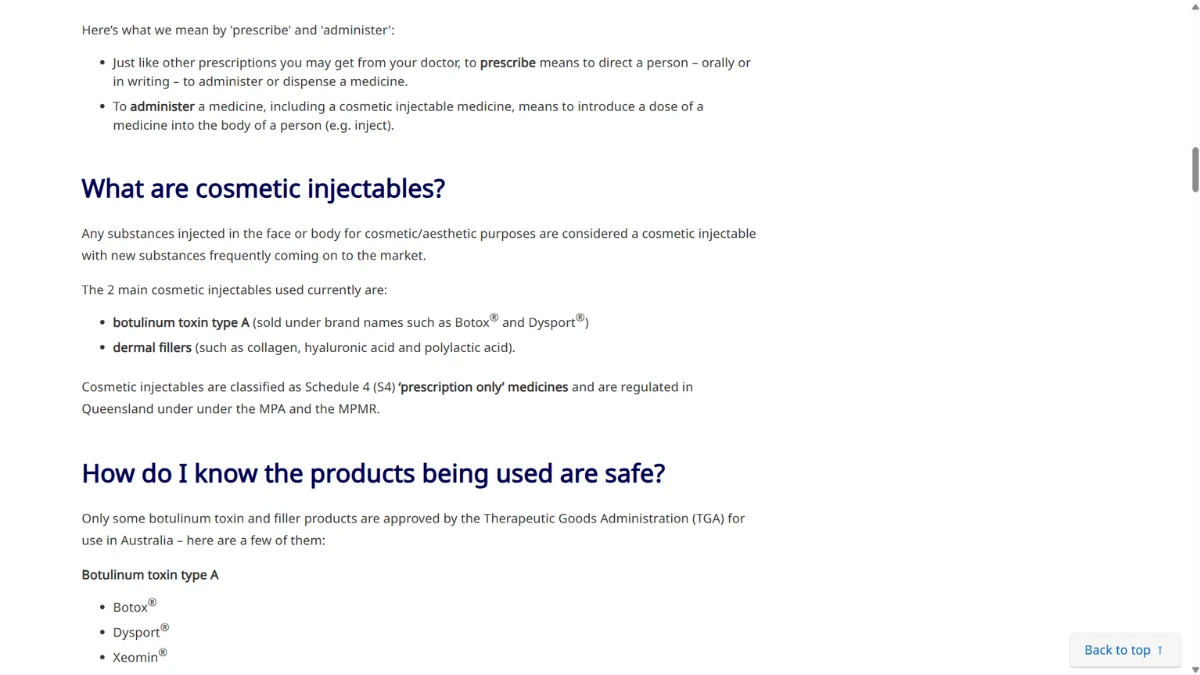
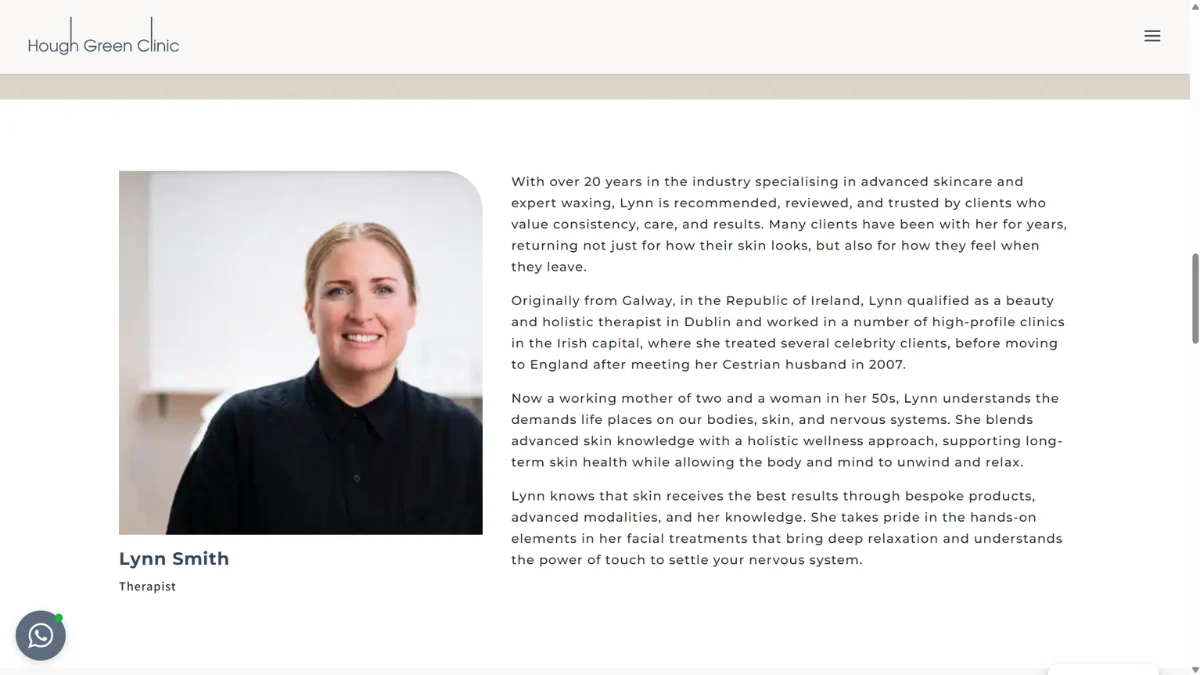
E-E-A-T stands for Experience, Expertise, Authoritativeness, and Trust. It’s the framework search engines and AI models use to judge whether content — especially content touching on health, skin, injectables, or the body — is safe to recommend to real people.
Because beauty and aesthetic treatments fall into a “your money or your life” category (they affect health and appearance decisions), AI systems apply extra scrutiny before citing a clinic. Practical ways to build E-E-A-T on a clinic’s site:
A depth signal is evidence that a piece of content covers a topic thoroughly enough to be a reliable single source — rather than a shallow page that only skims the surface. AI models prefer to cite pages that answer the full range of questions a user might have, because it reduces the need to stitch together multiple sources.
A shallow page about lip filler might mention the treatment name and a price. A page with strong depth signals covers:
You don’t need to cram all of this into one page in a way that overwhelms a reader — use clear subheadings so both humans and AI can navigate to the section they need.
AI models are trained to be skeptical of self-promotion, so they weight mentions of a clinic on independent, trusted sites — review platforms, beauty publications, local news, medical directories — more heavily than claims made on the clinic’s own website. This is often called “the citation effect.”
If ten independent, credible sources describe a clinic as a trusted provider of a specific treatment, an AI model treats that as far stronger evidence than the clinic’s own homepage saying “we’re the best in the city.” Ways to build third-party citations:
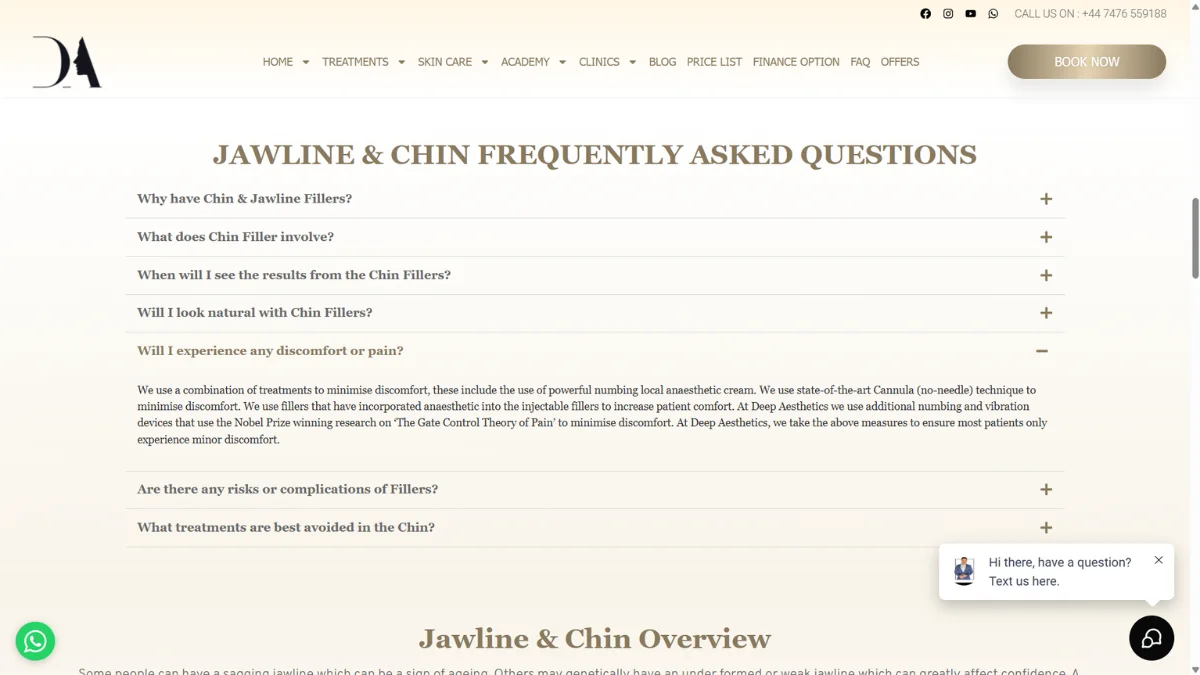
FAQ sections mirror exactly how people phrase questions to AI assistants, which makes them one of the easiest content formats for a model to lift and cite directly. A well-written FAQ answers real client questions in a self-contained way — question as a clear header, answer in a tight paragraph.
Good FAQ questions to build around any treatment:
Keep each answer genuinely self-contained — a model should be able to lift just that Q&A pair and have it make complete sense out of context.
Headlines phrased as questions match the natural structure of prompts people type into AI chat interfaces, making it easier for a model to match a user’s query to the exact section that answers it.
Instead of a section titled “Microneedling Downtime,” a GEO-friendly heading is “How Long Is Recovery After Microneedling?” — because that’s much closer to how someone would actually ask ChatGPT. This applies to page titles, H2/H3 subheadings, and blog post titles alike.
Local AEO (Answer Engine Optimization) is the practice of optimizing so AI assistants can confidently answer hyper-local questions like “which clinic near me is best for HydraFacials and open on weekends?” It depends heavily on data consistency and review content, not just map-pack rankings.
Two things matter most here:
Writing in depth about the specific ingredients and active compounds used in treatments and product lines gives AI models concrete, factual, non-promotional content to cite — and it answers one of the most common questions clients actually ask before booking or buying.
Rather than describing a facial as “rejuvenating and glowing,” a GEO-strong page explains what’s actually in it: the percentage of a given acid, the active peptides in a serum, how retinol differs from retinal, why a clinic chose one filler brand’s cross-linking technology over another. This kind of specific, ingredient-level detail does two things at once — it reads as expertise (feeding E-E-A-T) and it directly answers the comparison questions people increasingly ask AI before choosing a treatment or product.
Trying to do all ten strategies simultaneously is a good way to do none of them well. A reasonable sequence:
Is Generative Engine Optimization for Beauty Clinics replacing SEO? No. SEO and GEO work together — SEO builds the crawlable, indexable, technically sound foundation, while GEO determines whether AI models trust and cite what’s on that foundation. Clinics need both.
How long does it take to see results from GEO? Because much of GEO depends on accumulated authority and third-party citations, results typically build over months rather than weeks. Structural fixes like schema markup and direct-answer formatting can influence AI citations faster, but sustained visibility relies on the slower-building signals — reviews, press mentions, and consistent publishing.
Do I need to publish exact prices for GEO to work? Listing at least a price range for each treatment tends to help significantly. AI models are built to give users useful, specific answers, and “call for pricing” gives them nothing to cite — a competitor listing “$300–$500” becomes the easier, more helpful answer to surface instead.
Can I pay to appear in ChatGPT or AI Overview answers? No. Citations in generative AI answers are currently earned through authority, structure, and trust signals — not paid placement. This is what makes GEO fundamentally different from paid search advertising.

Gateway to AI Adoption. This is the Future of Marketing.
14 Days Journey to GEO - Day 2 Yesterday, you began ...
Generative Engine Optimization for Retail: How to Get Y...

How Manufacturing Businesses Can Show Up in ChatGPT, Pe...