Schema Used for AEO / GEO: The Truth
Schema Used for AEO / GEO: The Truth About the schem...


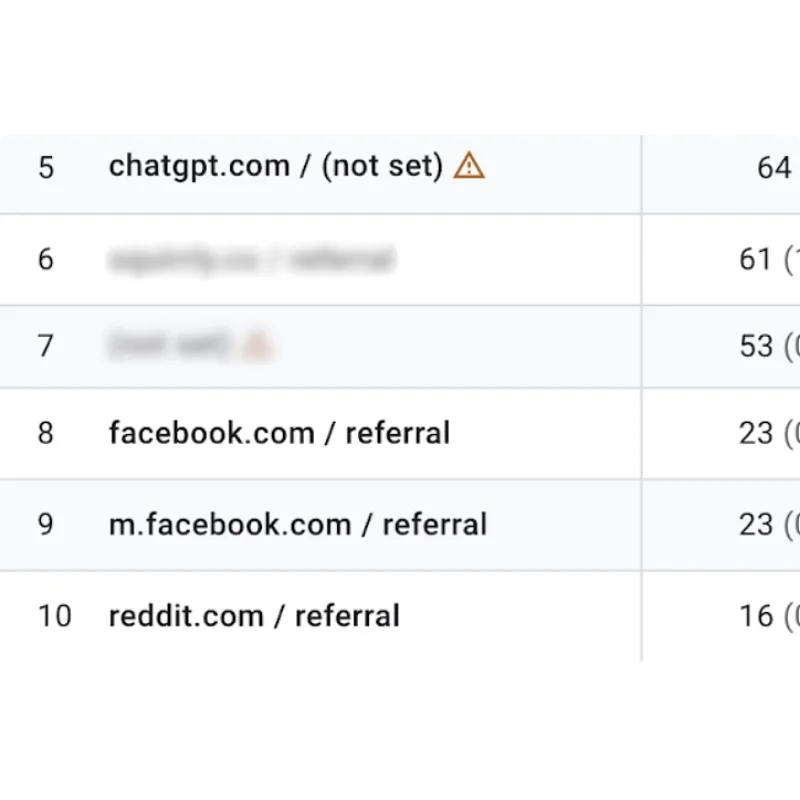
Manufacturing buyers do not read ten blue links anymore. They ask ChatGPT, Perplexity, Gemini, or Google’s AI Overviews a question, and they act on whatever answer comes back. If your business is not part of that answer, you are invisible at the exact moment a buyer decides who makes the shortlist.
This guide is written for manufacturing teams with no SEO background and no technical staff. Every tip below can be applied by one person with a website login and an afternoon.
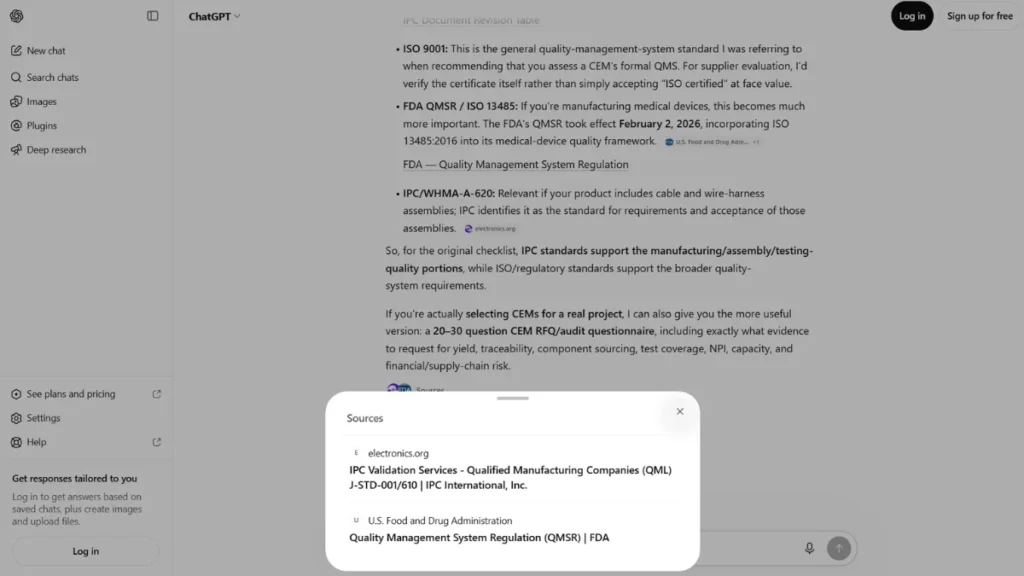
The practice of structuring content so AI systems can read it, trust it, and quote it inside their own generated answers. It is the successor to traditional SEO, which was built around ranking a link, not becoming the answer itself.
For manufacturers, this shift changes who wins the sale before it ever starts. Forrester’s 2026 Buyers’ Journey Survey of nearly 18,000 business buyers found that generative AI and conversational search now outrank vendor websites, product experts, and sales reps as the most meaningful source of vendor research. The share of buyers using AI in their purchase process grew from 89 percent in 2025 to 94 percent in 2026, according to the same survey. A separate 2026 industry report found that 68 percent of B2B buyers now use tools like Claude, Perplexity, and ChatGPT as their primary way to research and shortlist vendors, and that this trend is especially strong in manufacturing, where technical specifications are dense and hard to compare by hand.
The practical result is that an engineer or purchasing manager may already have a shortlist of three suppliers before your sales team even knows the deal exists. If your company is not one of the names the AI mentions, you were never in the running.
Manufacturing websites get skipped because they read like internal documents instead of answers to a buyer’s question. Most product pages are built for engineers who already know what they need, not for the AI systems or the purchasing managers trying to understand them.
Three habits cause this:
If your pages only speak the language of people who already work at your company, an AI tool has nothing plain to quote.
A page built for AI citation should open with a direct answer in the first sentence, then support that answer with detail underneath it. This is the opposite of the traditional narrative style, where the point arrives after several paragraphs of setup.
Here is a simple structure that works for almost any manufacturing page, whether it is a product page, a process explainer, or a blog post.
A useful gut check: read any single sentence from your page with no surrounding context. If it still makes sense and answers something specific, it is written correctly for GEO. If it needs the paragraph above it to mean anything, rewrite it.
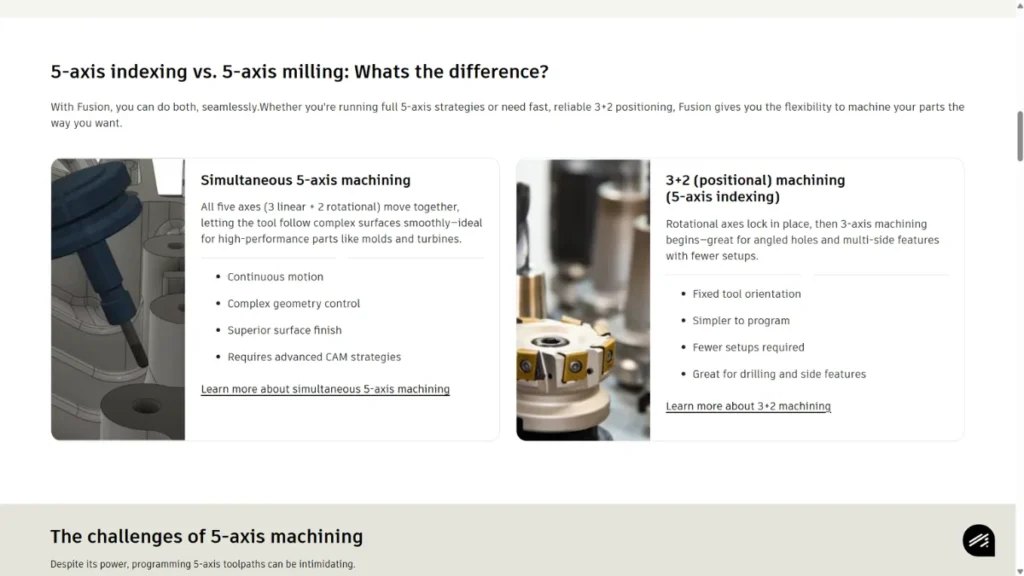
Content that answers a real, specific question buyers type gets cited. AI tools do not reward pages that describe your company. They reward pages that solve a problem someone actually searched for.
Manufacturing buyers commonly ask questions like these across different segments.
| Buyer intent | Example question |
|---|---|
| Process comparison | “MIG vs TIG welding for stainless steel, which is better?” |
| Sourcing decision | “What should I look for in a contract electronics manufacturer?” |
| Troubleshooting | “How do I fix warping in a sheet metal forming process?” |
| Cost estimation | “How much does custom injection molding cost for a small batch?” |
| Supplier discovery | “Who are the top metal fabricators in the Midwest?” |
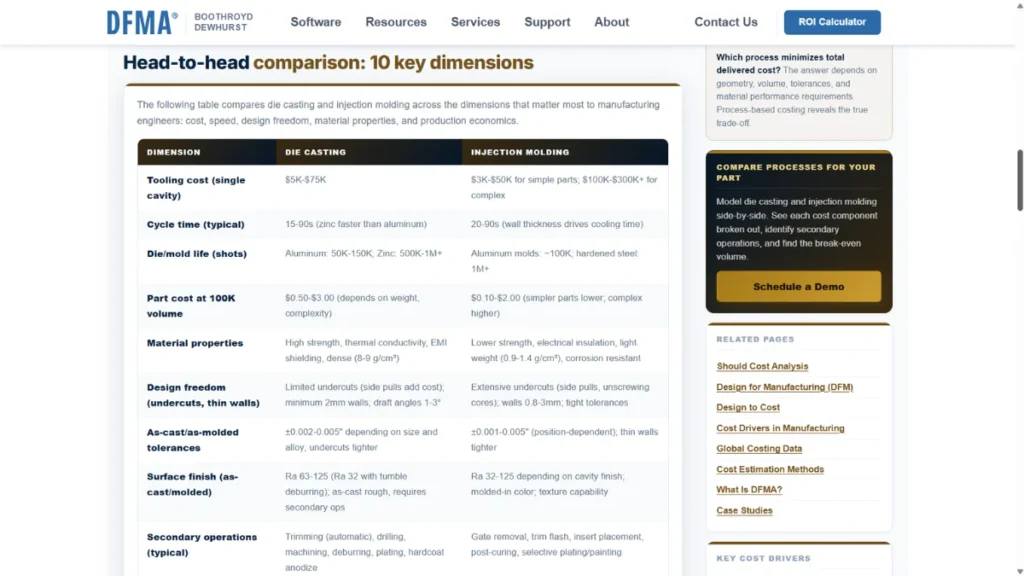
Instead of writing one page per product, build a hub page around a topic your business genuinely knows, then link it to supporting pages that answer the related questions above. A hub page on injection molding, for example, can link out to pages on “Injection Molding vs Die Casting,” “How to Fix Short Shots,” and “Best Materials for Injection Molding.” This tells AI tools that your business understands the entire subject, not just one part number.
AI tools pull manufacturing information from a mix of your own website, industry directories, press coverage, and public forums, not from your website alone. A recent analysis of ChatGPT’s citation behavior by Ahrefs found that 65.3 percent of ChatGPT’s top cited pages come from domains with a Domain Rating of 80 or higher, meaning authority earned over time is the dominant factor in what gets cited. Separately, a review of over one million AI prompts by Muck Rack found that more than 85 percent of non paid AI citations come from earned media sources rather than a company’s own website.
This means three things matter beyond your own pages.
A page should include roughly five to seven concrete facts, statistics, or named examples to support its main claims. Research from Princeton and Georgia Tech, presented at SIGKDD 2024, found that adding statistics to content improves AI citation rates by 30 to 40 percent, and that citing credible sources on top of that improves citation probability further.
For a manufacturing business, this might look like your ISO certification number and date, a real tolerance figure from a recent job, the number of years your equipment has been in service, or a measurable outcome from a past client. Vague claims like “industry leading precision” do not get cited. A specific number does.
Start with the pages you already have, not a full rebuild. Pick your three highest value product or service pages and rewrite the opening paragraph of each to directly answer the question a buyer would type.
None of this requires a developer or an agency retainer. It requires rewriting what you already have so a machine, and a busy buyer, can understand it in the first two sentences.
What does GEO mean in manufacturing marketing? GEO, or Generative Engine Optimization, refers to structuring your website and public content so AI tools like ChatGPT, Perplexity, and Google AI Overviews can read, trust, and quote it directly in their answers.
Is GEO different from traditional SEO? Yes. Traditional SEO is defined as optimizing a page to rank as a link on a results page. GEO is optimizing a page to become the actual text an AI tool reuses in its answer, which means clarity and direct answers matter more than keyword density.
Do small manufacturing businesses have a real chance against larger competitors in AI search? Yes. AI tools cite the clearest, most specific answer to a question, not necessarily the biggest brand. A smaller manufacturer that answers a niche process question precisely can be cited ahead of a larger competitor whose content is vague.
How long does it take to see results from GEO? There is no fixed timeline, since it depends on how much content already exists and how AI tools have indexed your industry. Consistent, specific updates to your highest value pages over a few months is a realistic starting expectation.
Do I need schema markup to be cited by AI tools? It helps but is not required to start. Structuring your content with clear question based headings and direct answers is the higher priority for a business just beginning GEO work. Schema, such as FAQ or HowTo markup, is a useful next step once the writing itself is solid.

Gateway to AI Adoption. This is the Future of Marketing.
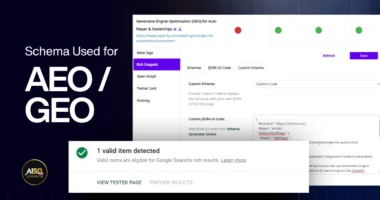
Schema Used for AEO / GEO: The Truth About the schem...
Generative Engine Optimization for Finance: How to Show...
AISQ Progress Update #8 – The Next Evolution of Squir...