OpenAI Secures Historic $6.6B in Funding, Now
OpenAI has raised a record-breaking $6.6 billion in a n...


It’s been a pleasure to have you all with me for the 14 Days Journey to GEO.
Day 13 will provide an important part of the strategy you develop for your own brand and then the path you’ll walk to make it all happen.
GEO isn’t SEO. SEO has evolved a lot. But it has not become GEO. It has not become AEO. The field of SEO has evolved a lot. I should know. I’ve been a professional in SEO since 2009. I’ve created systems that were adopted into Tumblr and Wix. I’ve created systems that changed everything about how modern brands do SEO. You know my works. Some of the SEO tools you’ve used also have sub-tools that originated from systems created by my teams and I.
GEO is not SEO. I told you in a previous day how Google tries to cause confusions and trick the industry. SEO… even my brand of Holistic SEO… usually happens on your own site. Yes: traffic, referal traffic, social signals, backlinks (from third-parties; otherwise, those are not backlinks).
But GEO takes placements on social media and third party sites (EG: other sites that YOU do not own) to a whole different level that hasn’t been done before.
During the first few days of the Journey, I have pressed on with the entity data and the entity signals. I have shown you my own research and how things evolved in SEO. Why they are a must for GEO.
Now, we’ll need to take what we’ve gathered there and start creating AEO GEO content that we will post and rank on third-party media.
GEO doesn’t happen on your own site.
You need your own site, but you can’t stop at that. You also need to take this step… you need to apply what you learn on Day 13 of the Journey to GEO, created by AISQ Growth. (see what I did there? Entity signaling is no joke).
In lesson 4 of the GEO Academy by AISQ Growth, you’ve seen many ideas for building great GEO, including review velocity. If you’re not sure, study Lesson 4 again.
If you go to Lesson 5 today, you’ll probably be super excited to find all the “tools” we’ve created for you inside. All kinds of worksheets and templates you’ll be using from now on.
And on the note of incredibly useful things you’re receiving from us, I’ve compiled some of the third party places that you can start owning and controling yourself to do your GEO work.
On Day 11 I have already asked you to place Digital PR for something you’ll be doing in the “end-game” of your strategy. Work through the other steps instead. Digital PR contains things like: Press Releases, Blogger and Journalist Engagements, Podcast Appearances, Guest Blogs, Contributing to bigger stories in order to get mentions, etc.
However, there’s another way to make appearances on third parties.
Before Digital PR, a brand can first build and own a network of “claimable” or “controllable” third-party assets.
That means assets where the brand can create, claim, complete, publish, maintain, or actively request reviews — without needing journalists, media relationships, or PR outreach.
Third-party assets are external profiles, listings, review pages, marketplaces, directories, publishing hubs, community profiles, app stores, partner directories, and platform pages that a brand can claim or build before doing Digital PR.
They help GEO because they create more places where AI systems can verify:
who you are, what you do, who you serve, where you operate, what others say about you, and whether your expertise is visible outside your own website.
I will give you a really big list, based on the industry you may be in. Our in-house team at AISQ Growth looks for such places when doing GEO works for clients.
By looking at the list and choosing the best options for your brand, you can already start building your third party assets today.
One more thing before I give you the list: You can study your competitors to get more ideas.
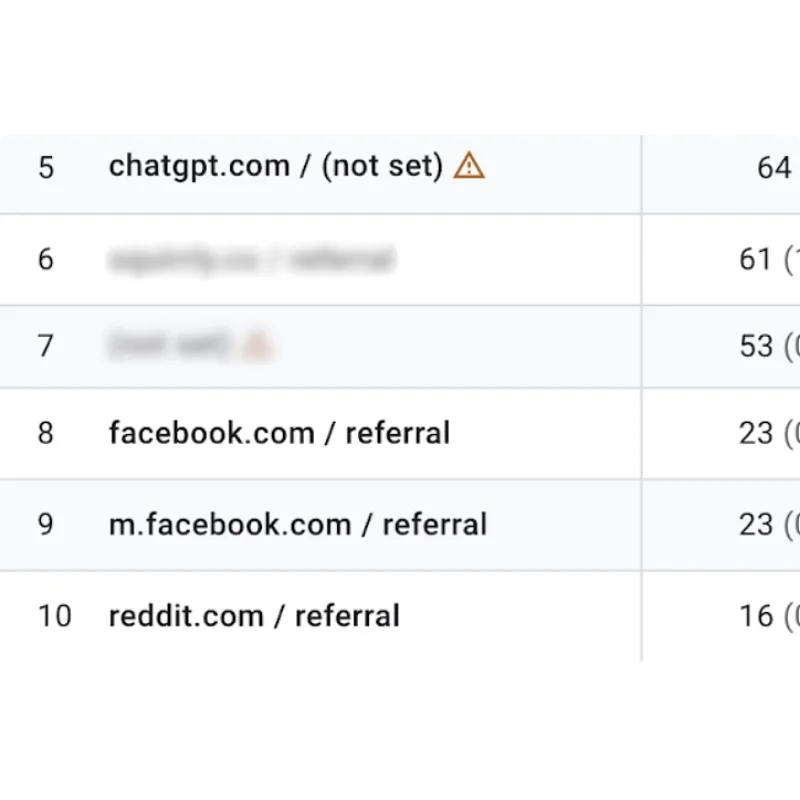
If you know of any good competitors who may be winning big time with ChatGPT, you can ask us for a Squirrly SPY report (or more). With that, you’ll know their content marketing strategy, their SEO growth … but: in the backlinks section you can study the links and SEE WHERE they actually got backlinks in order to do GEO, instead of SEO.
That can help you find places where you can also start to appear. If they let your competitors in, there’s a big chance they’ll let you in as well.
Using Ahrefs for such a job feels a lot like:

You shouldn’t pay $200 USD / month to find the GEO places your competitors have been using. Not when you can pay Squirrly SPY $50 USD one time, for a report done personally by our team. You get a one time payment and the competitor analysis you actually want, without the overkill. And without having to become an engineer in order to understand Ahrefs.
The idea for the third parties is to choose for each brand you create (if you’re a small business owner / entrepreneur) or for each brand you manage (if you’re a webdev agency or marketing agency) a relevant set of third party places you can publish content that will strengthen entities and entity data and build trust with AI search engines and the LLMs in general.
This doesn’t mean you should go and start building on all of them. That’s why I gave you the idea to sort them according to what competitors are using.
Try to choose according to industry. For example: a cake shop wouldn’t benefit from G2 software reviews… so the cake shop wouldn’t need to create a presence on Capterra and G2, because it doesn’t sell software.
And now:
The List.
These are the basic “entity confirmation” assets.
Search and map entities:
Google Business Profile, Bing Places, Apple Business Connect / Apple Maps, Yelp, Facebook Page, LinkedIn Company Page, Instagram profile, YouTube channel.
Review and trust assets:
Trustpilot, Google reviews, Facebook reviews, industry-specific review platforms, testimonial pages on marketplaces.
Business and company databases:
Crunchbase, LinkedIn, Wellfound, OpenCorporates, local chamber of commerce profiles, business association directories.
Content / publishing hubs:
Medium, Substack, LinkedIn Articles, YouTube, podcast platforms, SlideShare, Speaker Deck, Notion public pages, GitBook, ReadMe-style public docs.
Community and discussion assets:
Reddit profile, Quora profile, LinkedIn groups, Facebook groups, niche forums, Slack/Discord community profiles where public/indexable, industry community directories.
These are not Digital PR. They are entity footprint assets.
For SaaS, the third-party asset map should be much richer than “get listed on G2.”
Review / comparison platforms:
G2, Capterra, GetApp, Software Advice, TrustRadius, Crozdesk, SaaSworthy, AlternativeTo, StackShare.
Launch / discovery platforms:
Product Hunt, BetaList, Indie Hackers, Hacker News profile, There’s An AI For That, Futurepedia, startup directories, AI tool directories if relevant.
App and integration marketplaces:
Zapier App Directory, Make, HubSpot App Marketplace, Salesforce AppExchange, Atlassian Marketplace, Slack App Directory, Shopify App Store, WordPress.org, WooCommerce Marketplace, Chrome Web Store, Microsoft AppSource, Google Workspace Marketplace.
Developer proof assets:
GitHub, GitLab, npm, PyPI, Packagist, Docker Hub, VS Code Marketplace, JetBrains Marketplace, API documentation portals, Postman public workspace.
Community assets:
Reddit communities, Stack Overflow tags, Dev.to, Hashnode, DZone, Medium, Substack, Discord communities, technical forums.
For SaaS, these assets help AI understand not just the brand, but also category, integrations, use cases, alternatives, reviews, developer adoption, and ecosystem relevance.
Agencies need trust, proof, niche positioning, and client outcomes.
Agency directories:
Clutch, The Manifest, DesignRush, GoodFirms, UpCity, Sortlist, Agency Spotter, Expertise.com.
Partner ecosystems:
Google Partner directory, Meta Business Partner directory, HubSpot Solutions Directory, Shopify Experts, Webflow Experts, WooCommerce partners, WordPress agency directories, Semrush Agency Partners, Mailchimp Experts, Klaviyo Partner Directory.
Portfolio / proof assets:
Behance, Dribbble, Awwwards, Webflow Showcase, case study pages on client sites, YouTube channel, LinkedIn company page, founder LinkedIn profile.
Review platforms:
Clutch reviews, Google reviews, Trustpilot, G2 if the agency has a productized tool or platform.
This is very relevant for AISQ Growth because agencies can build GEO authority before PR simply by owning the right partner and review ecosystem pages.
Local businesses need entity consistency and review velocity.
Map and local discovery assets:
Google Business Profile, Apple Maps, Bing Places, Yelp, Facebook Page, Nextdoor, Foursquare, Waze, TomTom, HERE, OpenStreetMap.
Local directories:
Local chamber of commerce, city business directories, local tourism boards, local professional associations, local “best of” directories.
Review assets:
Google reviews, Yelp, Trustpilot, Facebook, industry-specific review sites.
Booking / appointment platforms:
Calendly public pages, Fresha, Booksy, Mindbody, Vagaro, OpenTable, Resy, TheFork, Zocdoc, depending on industry.
For local businesses, the core GEO win is usually:
consistent NAP + complete profiles + recent reviews + local category relevance.
Lesson 4 already supports this with NAP consistency and directory completion across Google, Yelp, Bing Places, Apple Maps, Trustpilot, and industry-specific directories.
Ecommerce needs product-level and store-level third-party assets.
Marketplaces:
Amazon, eBay, Walmart Marketplace, Etsy, Faire, Shopify Shop app, TikTok Shop, Meta Commerce, Google Merchant Center, Pinterest Shopping.
Review assets:
Trustpilot, Sitejabber, ResellerRatings, Google Customer Reviews, Judge.me public review pages, Yotpo syndicated reviews.
Product discovery assets:
Google Shopping, Pinterest, YouTube product videos, TikTok profile, Instagram Shop, influencer storefronts where applicable.
Niche marketplace assets:
For handmade: Etsy, Faire.
For fashion: Lyst, Depop, Poshmark.
For electronics: Newegg, Back Market.
For B2B products: Alibaba, Thomasnet, Global Sources, Europages.
For ecommerce GEO, the goal is to give AI systems more confidence around product categories, reviews, availability, policies, brand reputation, and customer sentiment.
Professional services need proof of expertise, credentials, and trust.
General professional assets:
LinkedIn personal profile, LinkedIn company page, Google Business Profile, Trustpilot, industry association directory, chamber of commerce profile.
Consultants / coaches:
LinkedIn, Substack, Medium, YouTube, podcast profiles, Maven, Clarity.fm, GrowthMentor, Contra, Upwork Expert-Vetted where relevant.
Accounting / finance:
QuickBooks ProAdvisor directory, Xero Advisor directory, CPA association directories, local accountant directories, Trustpilot, Google Business Profile.
Legal:
Avvo, Justia, FindLaw, Lawyers.com, Martindale-Hubbell, Nolo, local bar association directory, Google Business Profile.
Medical / healthcare:
Healthgrades, WebMD Care, Zocdoc, Vitals, RateMDs, Doctify, Psychology Today, RealSelf, Google Business Profile.
Real estate:
Zillow, Realtor.com, Redfin, Homes.com, Trulia, local MLS / realtor association profiles, Google Business Profile.
For professional services, the best third-party assets are the ones that reinforce:
license, specialization, location, reviews, credentials, and client outcomes.
This is where Medium, Dev.to, GitHub, package ecosystems, and technical communities matter a lot.
Code and package assets:
GitHub, GitLab, npm, PyPI, Docker Hub, Packagist, Maven Central, Homebrew, crates.io, WordPress.org plugin repo.
Developer publishing assets:
Dev.to, Hashnode, Medium, DZone, Substack, GitBook, ReadMe, Stack Overflow, Hacker News, Reddit technical communities.
AI / ML assets:
Hugging Face, Replicate, Papers With Code, Kaggle, GitHub, ModelScope, AI tool directories, Product Hunt.
Browser / IDE / workflow marketplaces:
Chrome Web Store, Firefox Add-ons, VS Code Marketplace, JetBrains Marketplace, Postman public workspaces.
For technical products, the best GEO third-party assets are often not “review sites.” They are repositories, docs, packages, examples, community answers, and technical explainers.
Home services:
Angi, HomeAdvisor, Thumbtack, Porch, Houzz, Yelp, Google Business Profile, Nextdoor.
Construction / contractors:
BuildZoom, The Blue Book, local contractor directories, trade association directories, Google Business Profile, Houzz.
Architecture / interiors / design:
Houzz, Architizer, Behance, Dribbble, Awwwards, local design directories, Google Business Profile.
Specialized trades:
Checkatrade, TrustATrader, Rated People, MyBuilder, Bark, depending on market.
These industries benefit from project photos, service areas, reviews, certifications, and before/after proof.
Restaurants:
Google Business Profile, Apple Maps, Yelp, TripAdvisor, OpenTable, Resy, TheFork, Michelin page if applicable, local food directories.
Hotels / accommodations:
Booking.com, Expedia, Hotels.com, TripAdvisor, Google Travel, Agoda, Airbnb, VRBO, local tourism boards.
Tours / experiences:
TripAdvisor, GetYourGuide, Viator, Airbnb Experiences, Klook, local tourism directories, Google Business Profile.
For these businesses, AI systems can pull heavily from reviews, availability platforms, local listings, ratings, photos, and travel directories.
Course platforms:
Udemy, Skillshare, Coursera, Maven, Teachable public school pages, Class Central, Thinkific public profiles, Kajabi pages.
Credential / certificate assets:
Credly, Accredible, Badgr, professional association directories, alumni directories.
Expert authority assets:
LinkedIn, YouTube, Substack, Medium, podcast platforms, Goodreads author page, Amazon Author Central, SpeakerHub.
School / institution assets:
Niche, GreatSchools, Google Business Profile, university directories, education directories, review platforms.
For education brands, third-party assets help AI verify instructor credibility, student outcomes, reviews, curriculum focus, and topical authority.
Trust and charity platforms:
Candid / GuideStar, Charity Navigator, GreatNonprofits, GlobalGiving, Benevity, local nonprofit directories.
Community assets:
Facebook Page, LinkedIn, Google Business Profile, local government/community directories, event platforms, volunteer platforms.
Campaign platforms:
GoFundMe Charity-style pages, Donorbox campaign pages, Givebutter, Eventbrite, Meetup.
For nonprofits, these assets help AI understand mission, legitimacy, cause area, activity, and community trust.
Authority profiles:
LinkedIn, YouTube, Substack, Medium, X, Instagram, TikTok, Threads, Bluesky, Quora.
Author assets:
Amazon Author Central, Goodreads, BookBub, publisher bio pages, podcast guest profiles.
Speaker assets:
SpeakerHub, event profile pages, conference speaker pages, podcast directories, YouTube interviews.
Community assets:
Reddit, Discord, Patreon, Circle, Mighty Networks, Substack comments, niche creator directories.
For personal brands, the third-party asset strategy should prove:
what you know, where you have spoken, what you have published, who follows you, and what communities associate you with.
OpenAI has raised a record-breaking $6.6 billion in a n...
LinkedIn has introduced a new AI Hiring Assistant desig...
We’re opening the first 100 seats available for Conte...