



During routine SEO checks, the agency kept running into a confusing pattern.
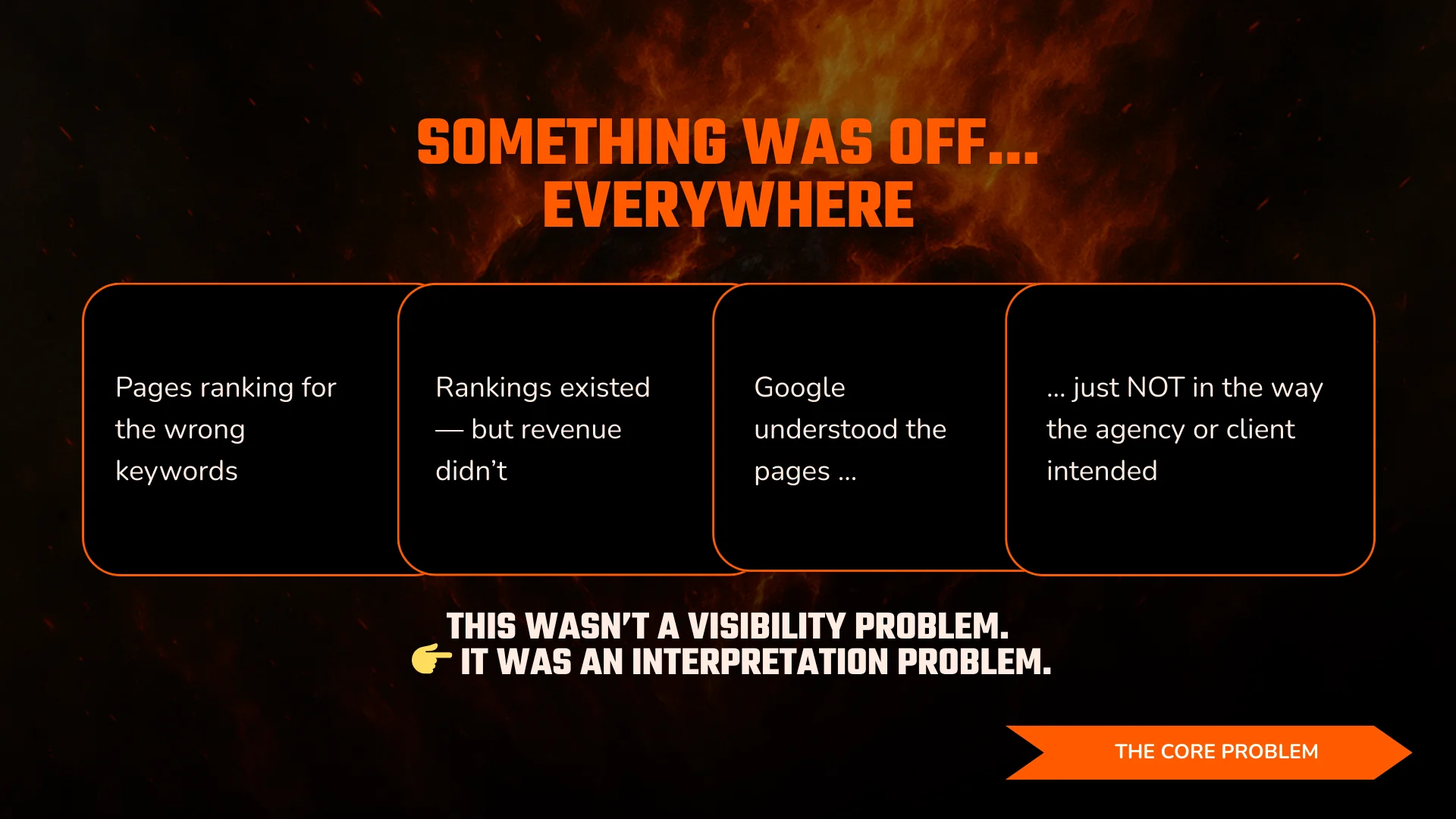
Pages that were meant to rank for a specific keyword were ranking, or attempting to rank, for a completely different keyword.
This wasn’t a visibility problem. It was an interpretation problem.
Google was understanding the pages differently than the agency or the client intended.
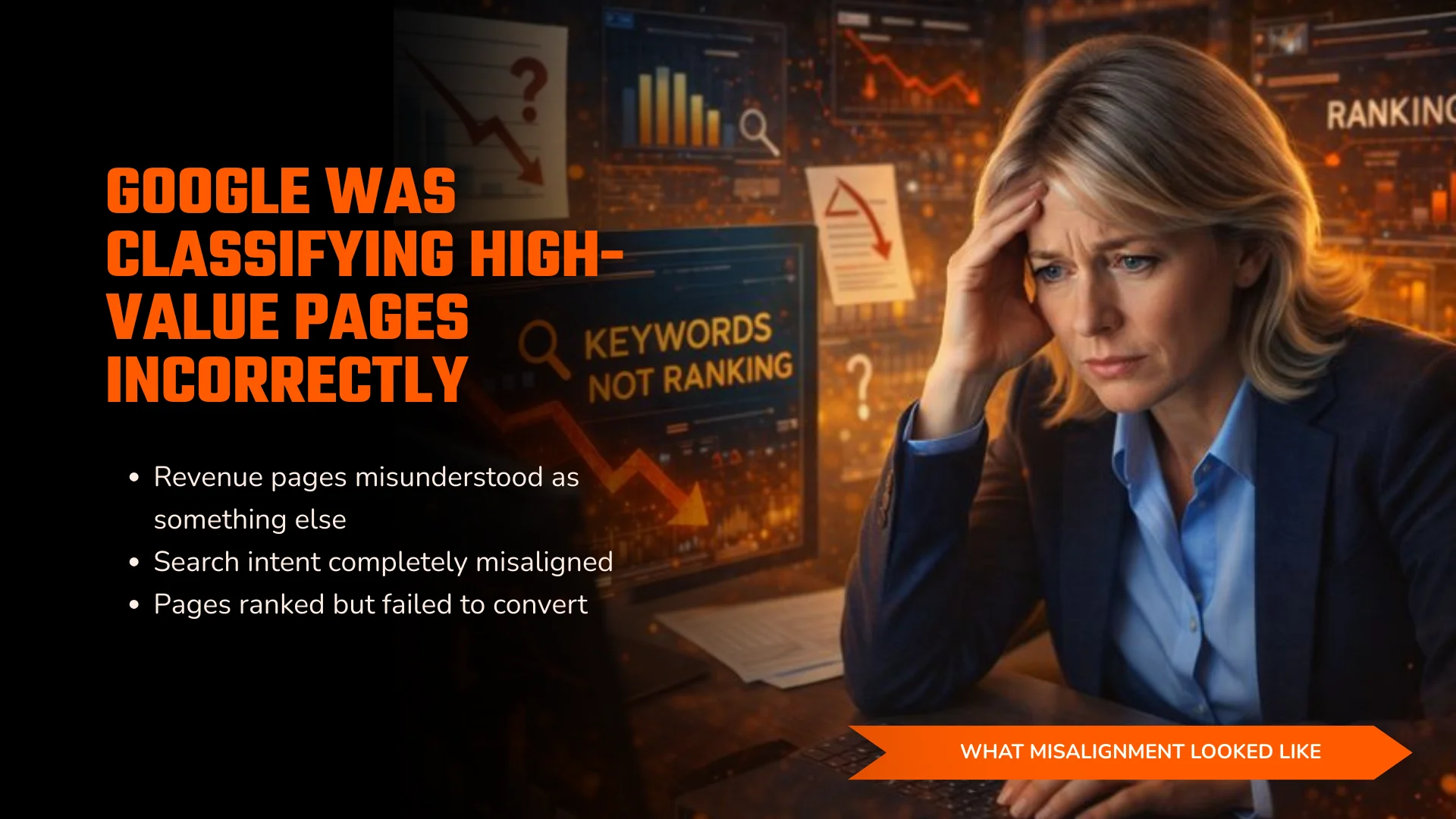
As a result, even when pages ranked, they ranked for the wrong intent.
High-value, revenue-generating pages were classified by Google as covering a completely different topic than the one the client wanted to rank for.
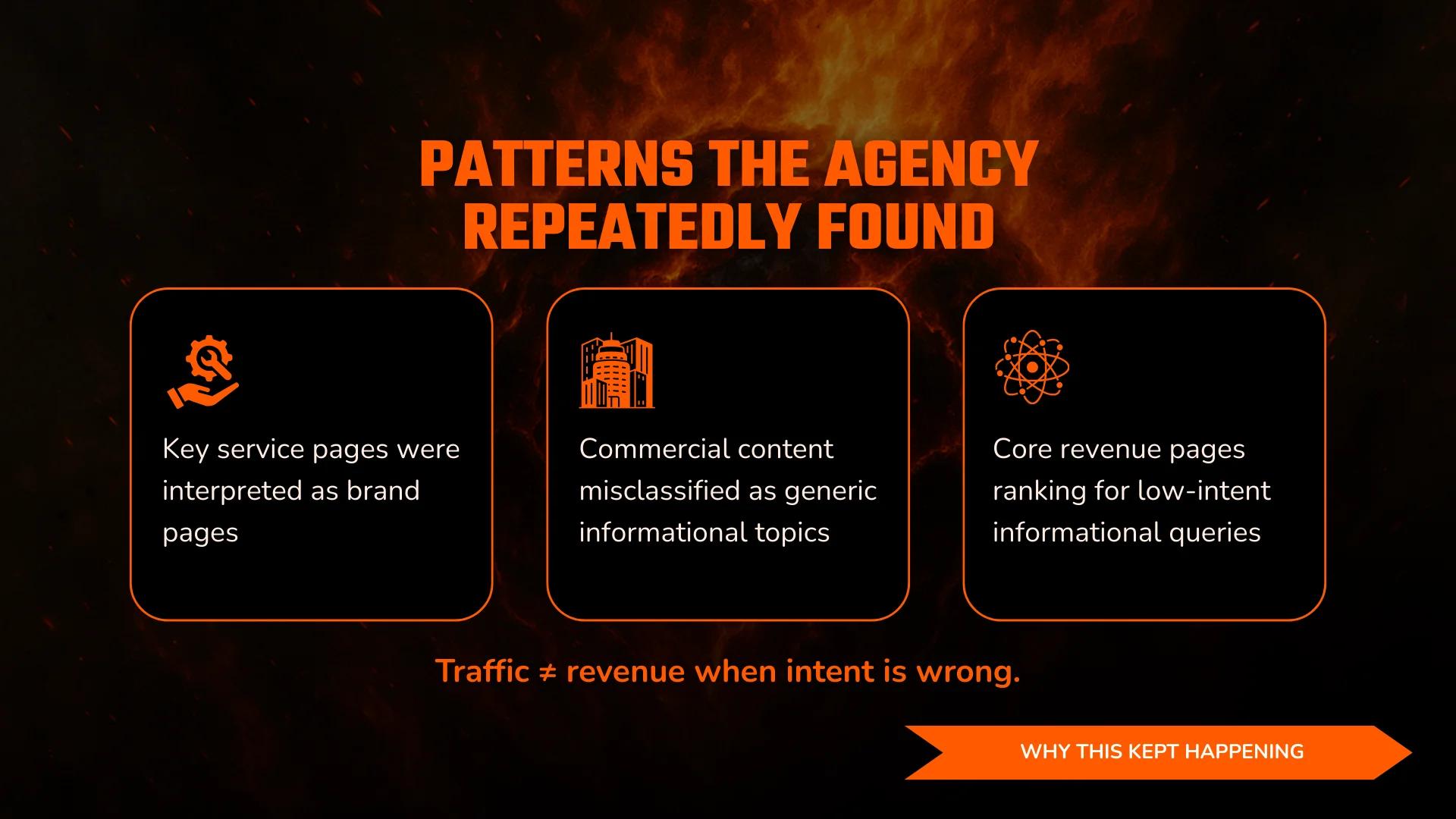
Common patterns the agency repeatedly found included:
e.g., A page meant to rank for “commercial cleaning services” was understood by Google primarily as a brand page because the company name appeared too frequently compared to service-focused terms.
e.g., A page meant to rank for “custom wedding cakes Amsterdam” was understood as a page about “organic cake ingredients” because phrases like “natural ingredients” dominated the copy and headings.
e.g., A page intended to rank for “emergency plumber in London” was ranking for “how to stop a leaking pipe.”
In all cases, the result is: rankings suffer where revenue should come from.
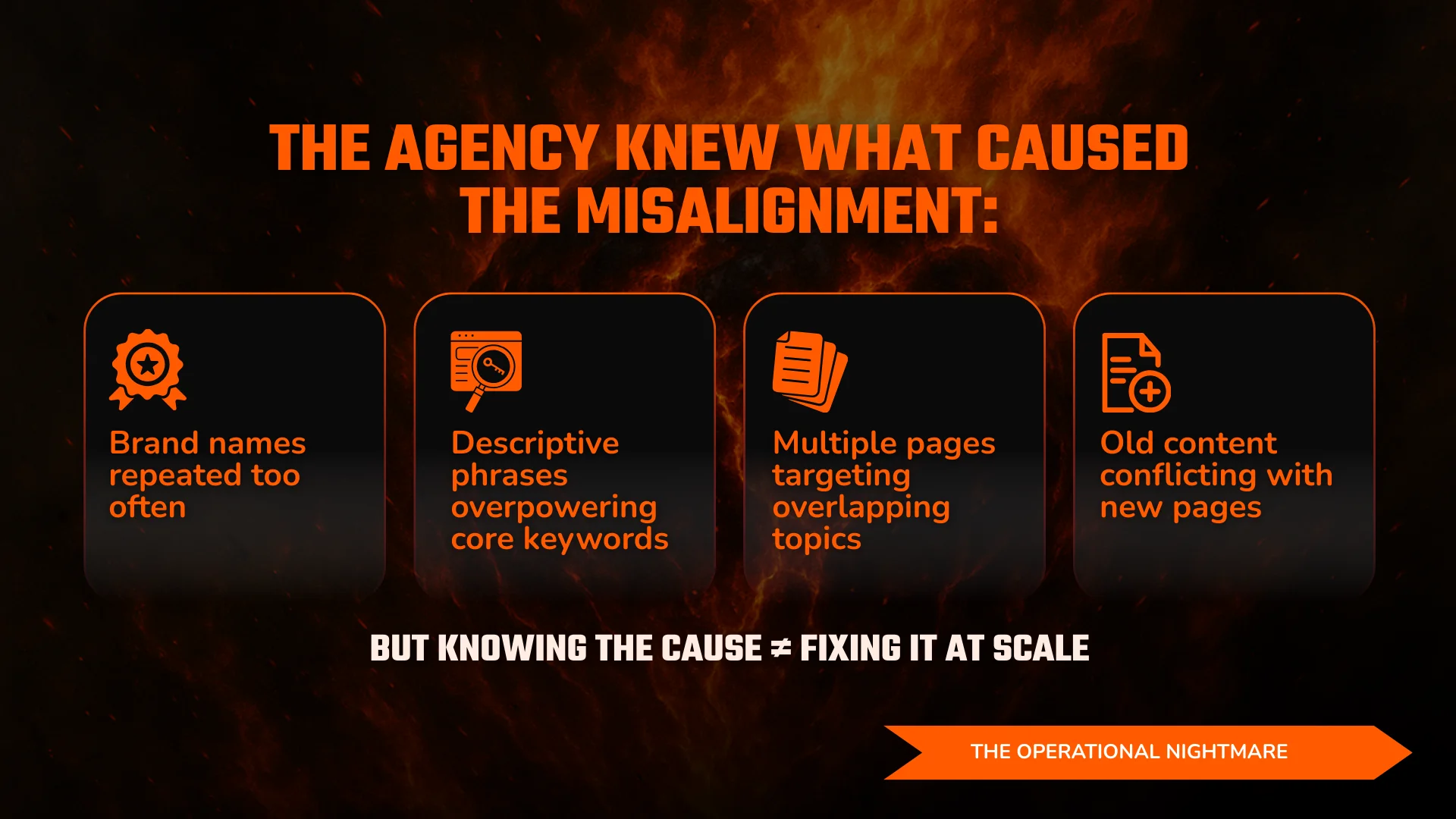
From an SEO standpoint, the agency knew what usually caused this misalignment:
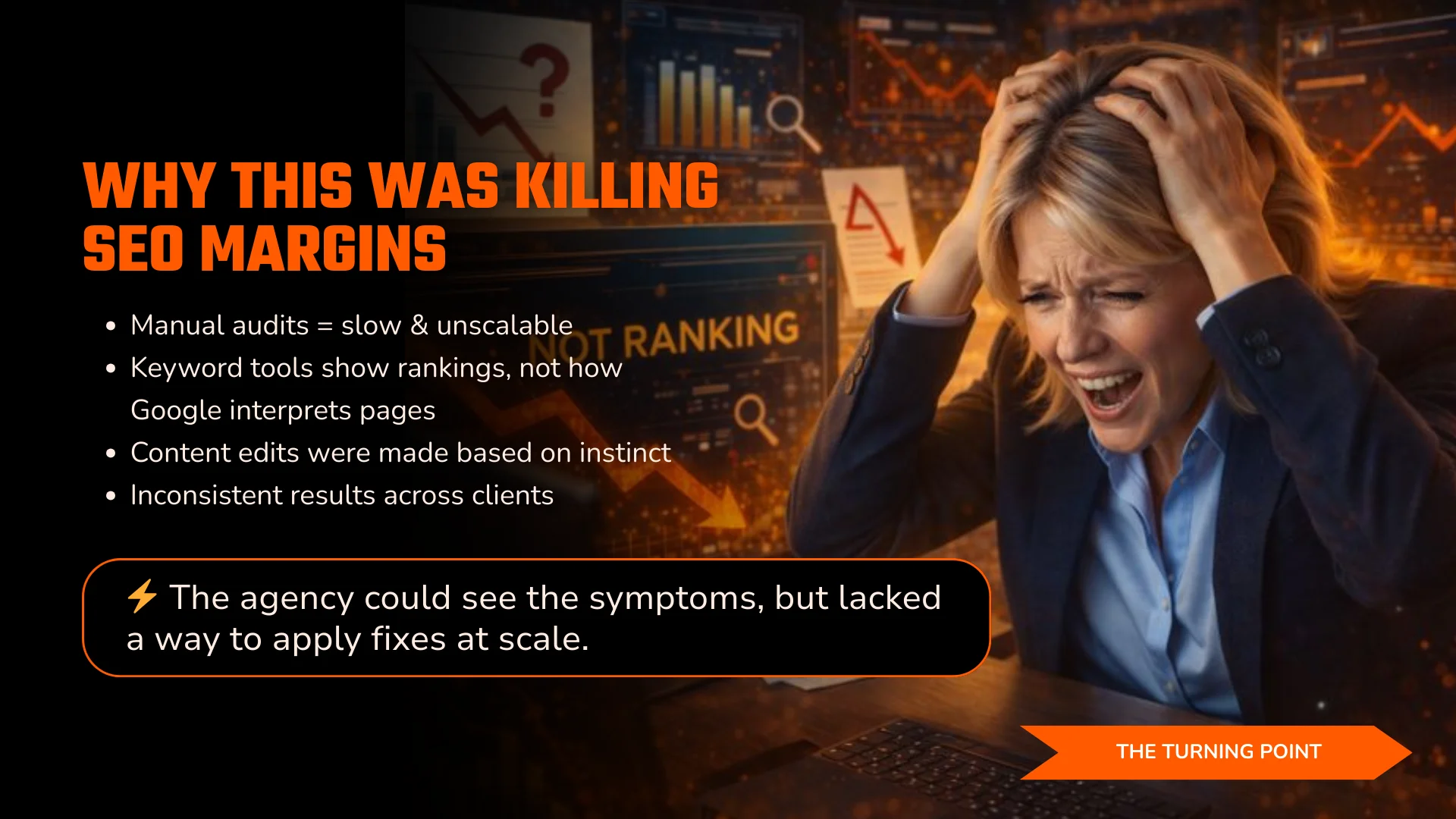
But knowing why it happened did not make it easy to fix. From an operational perspective, this created serious friction for the agency:
The agency could see the symptoms, but lacked a reliable way to understand how Google interpreted each page and apply fixes at scale.
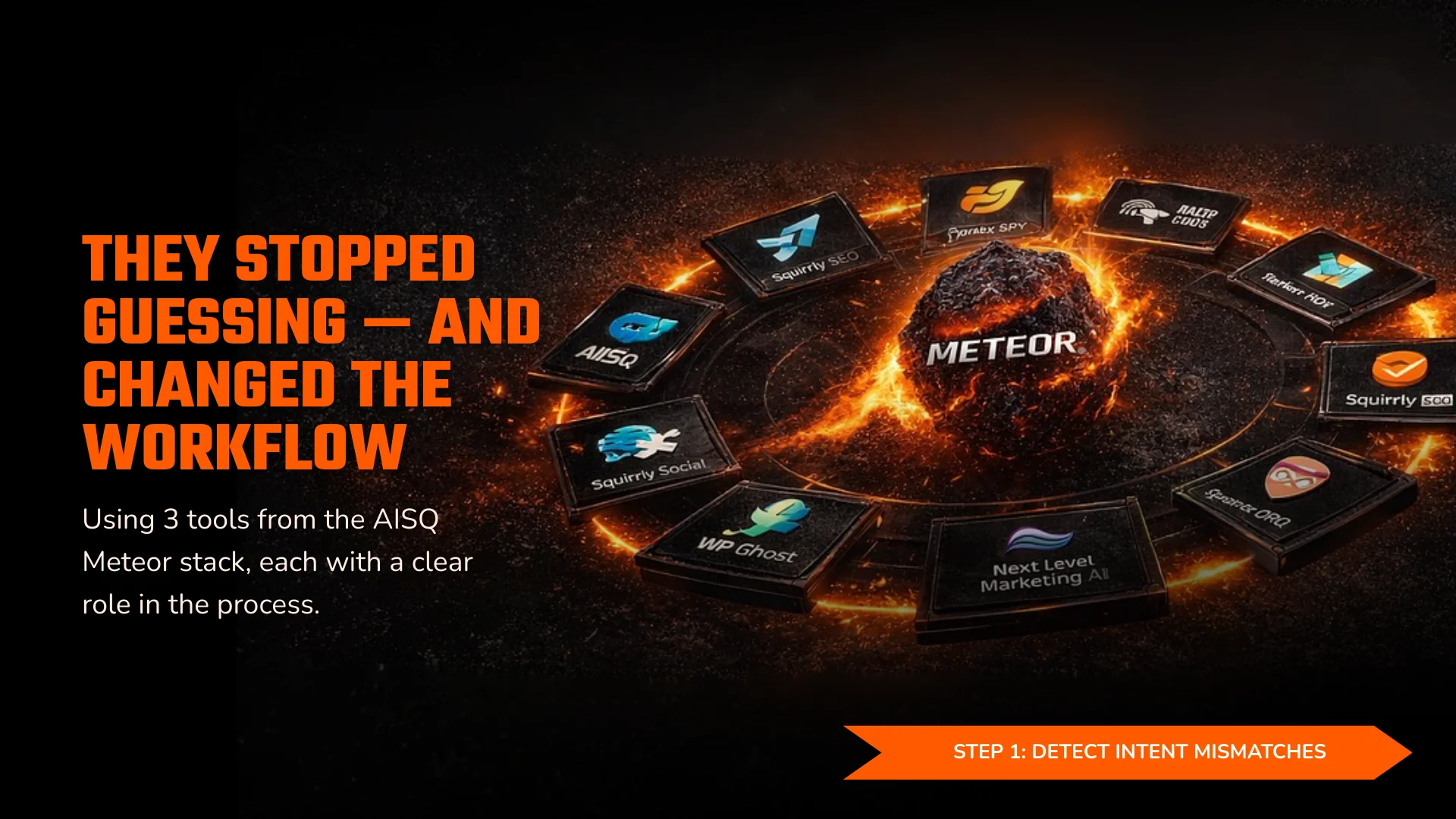
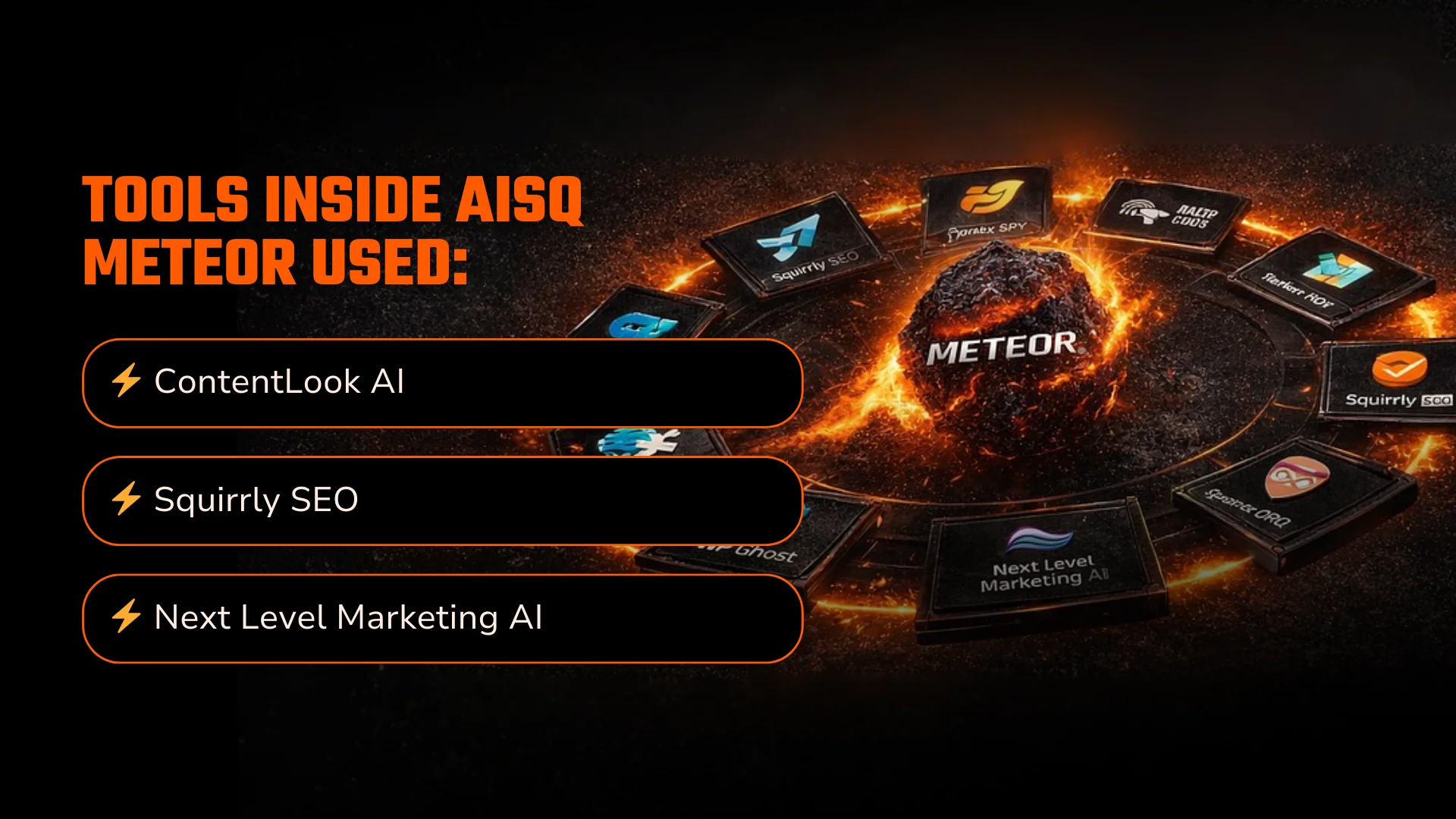
The agency rebuilt its workflow using 3 tools from the AISQ Meteor stack, each with a clear role in the process.
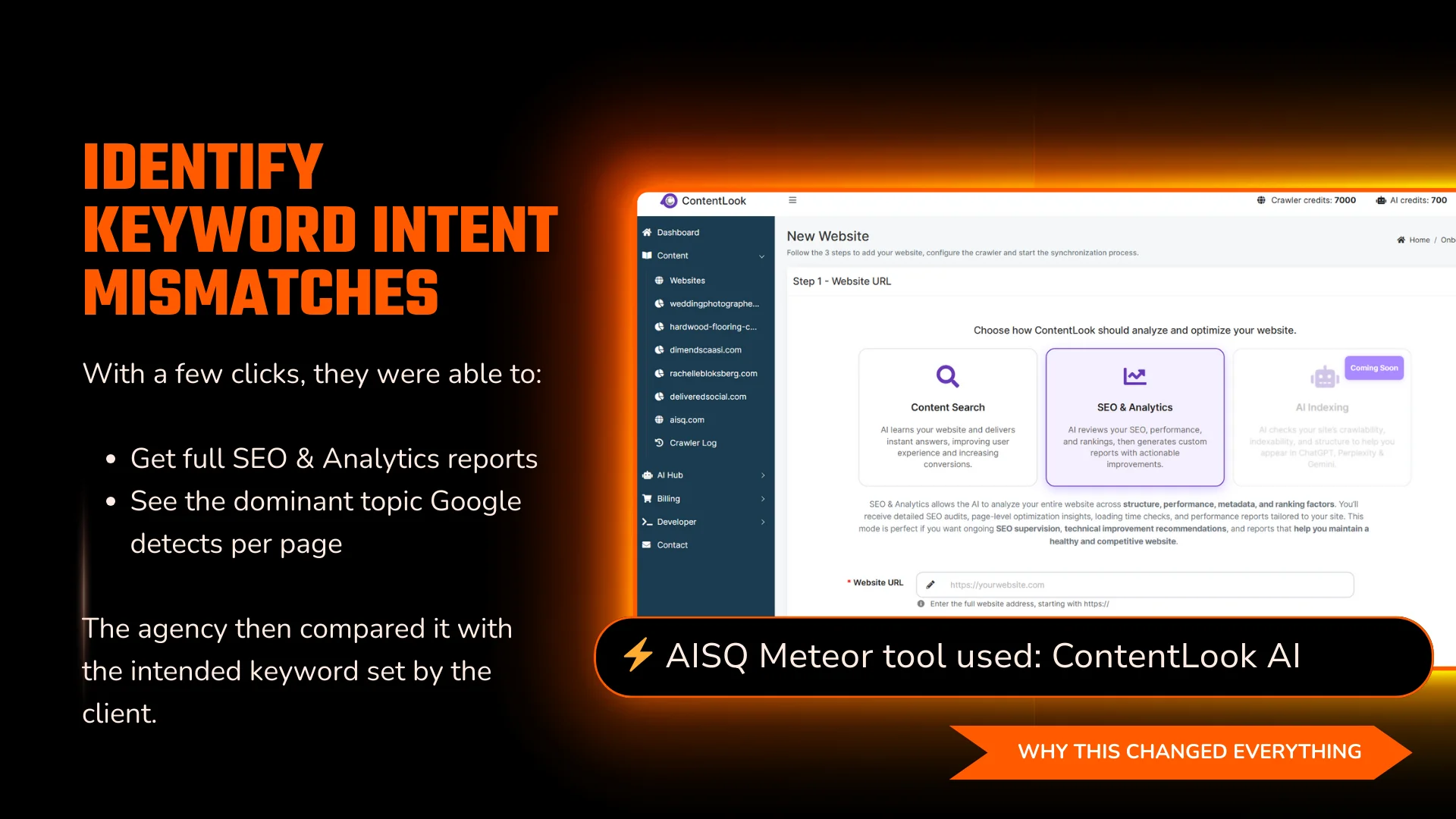
Step 1: Identify keyword intent mismatches with ContentLook AI
They started by using ContentLook AI to identify the exact pages that Google was interpreting as being optimized for different keywords than the intended ones.
The agency added the client’s site to ContentLook AI and ran a full SEO & Analytics report.
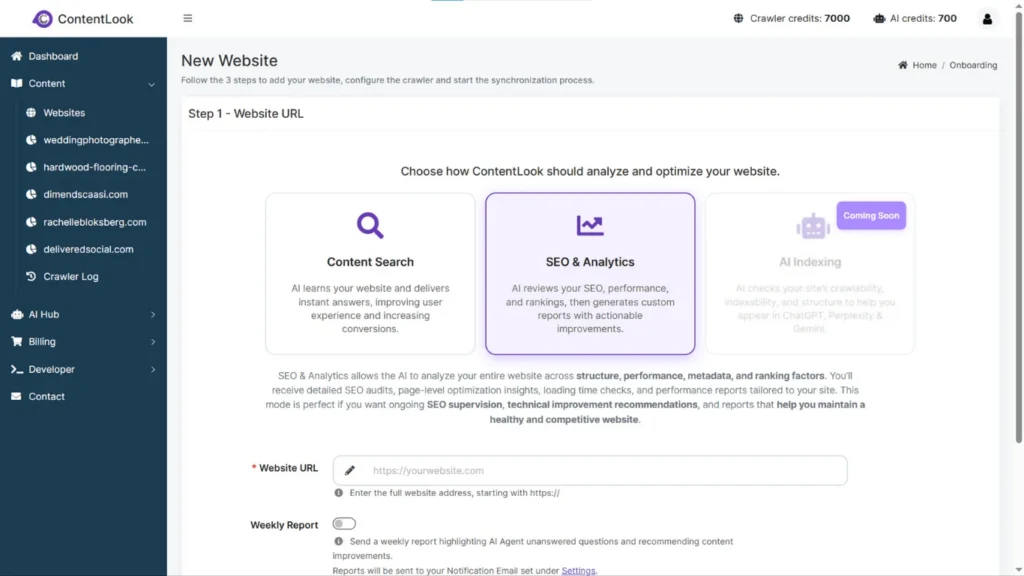
Once the report was complete, they could clearly see the actual dominant topic Google was detecting for each page and compare it with the intended keyword set by the client.
By comparing these two, they quickly identified which pages were misaligned and why Google was understanding them differently.
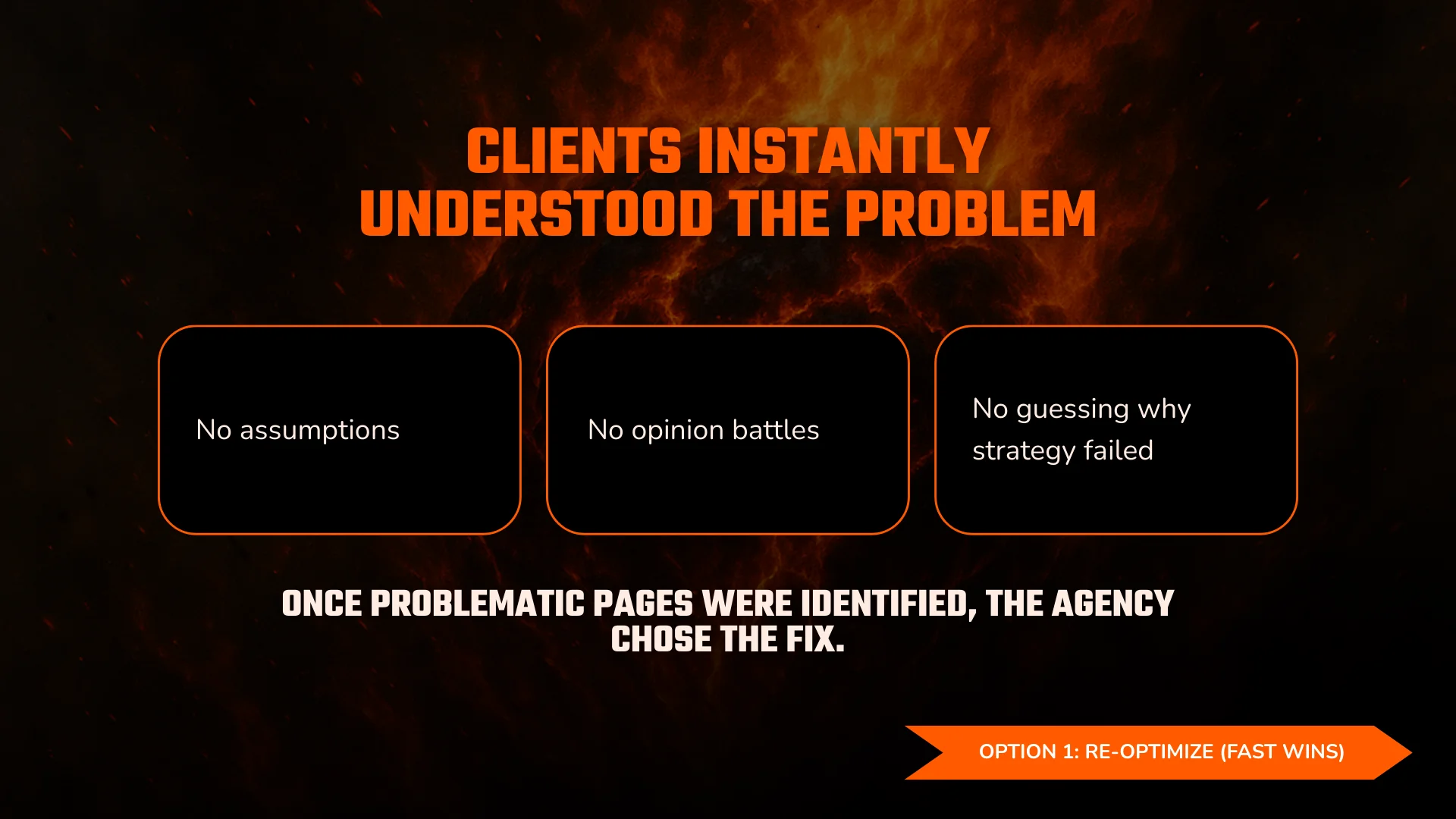
Instead of guessing or debating, the agency could clearly show clients: “This page is being understood as X, even though we want it to rank for Y.”
Step 2: Fix intent issues using the right tool for the job
Once problematic pages were identified, the agency chose the fix based on how far off the intent was.
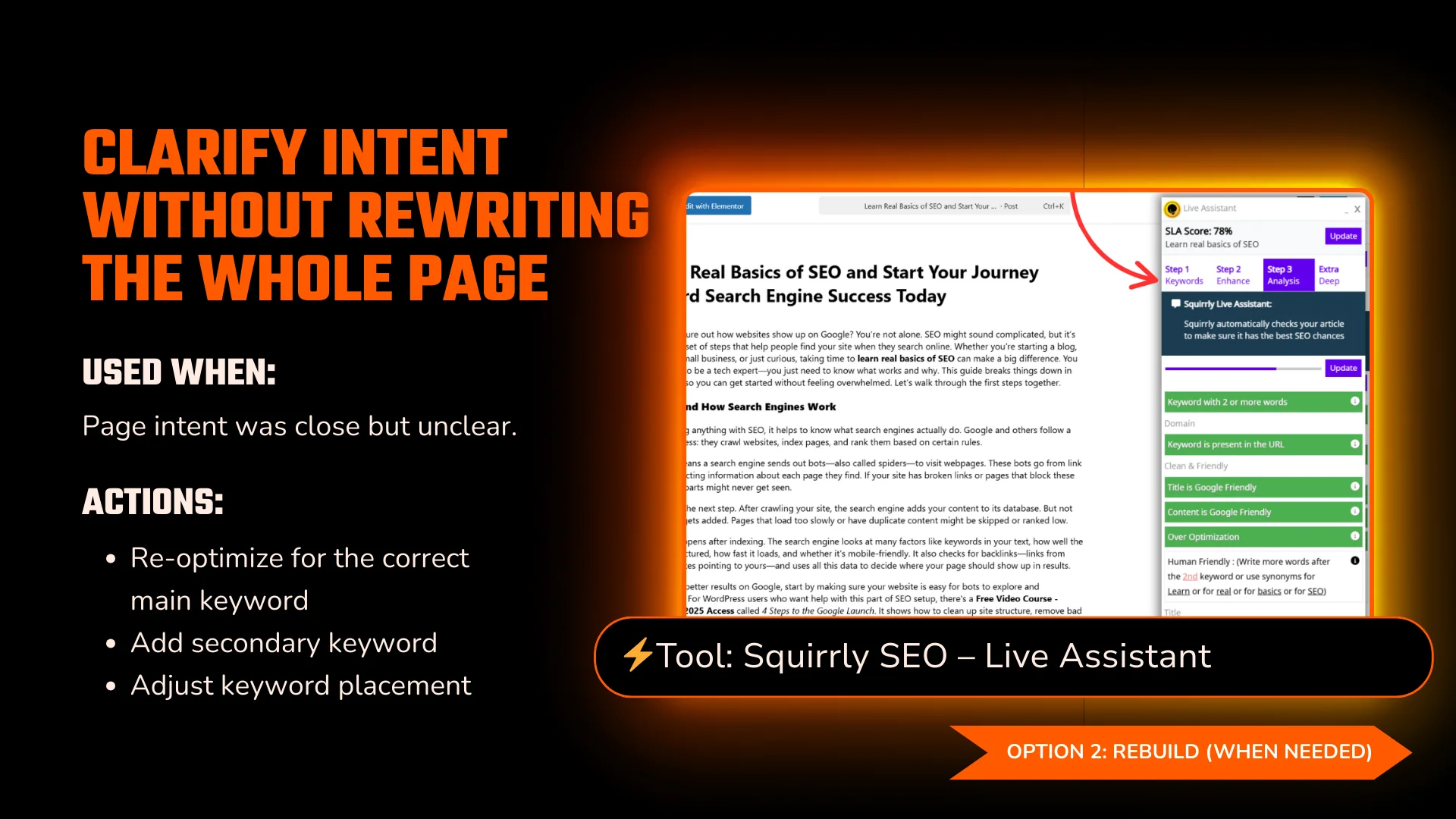
Option 1: Re-optimize existing content with Squirrly SEO
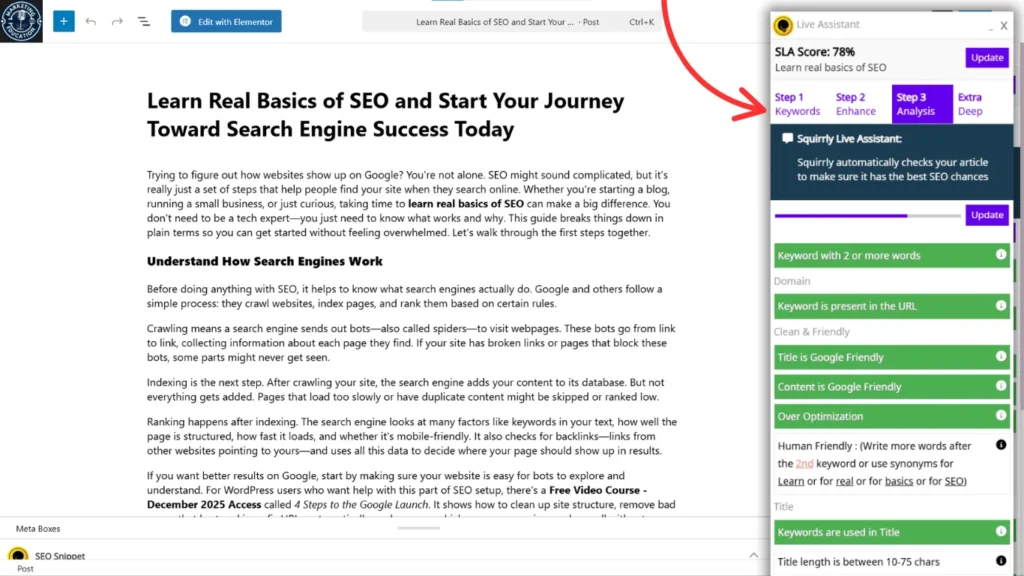
They used Squirrly SEO’s Live Assistant when the page intent was close but unclear.
This allowed them to:
This gave search engines clearer topical context without the agency having to rewrite the entire page from scratch.
Time investment per page: ~10–20 minutes
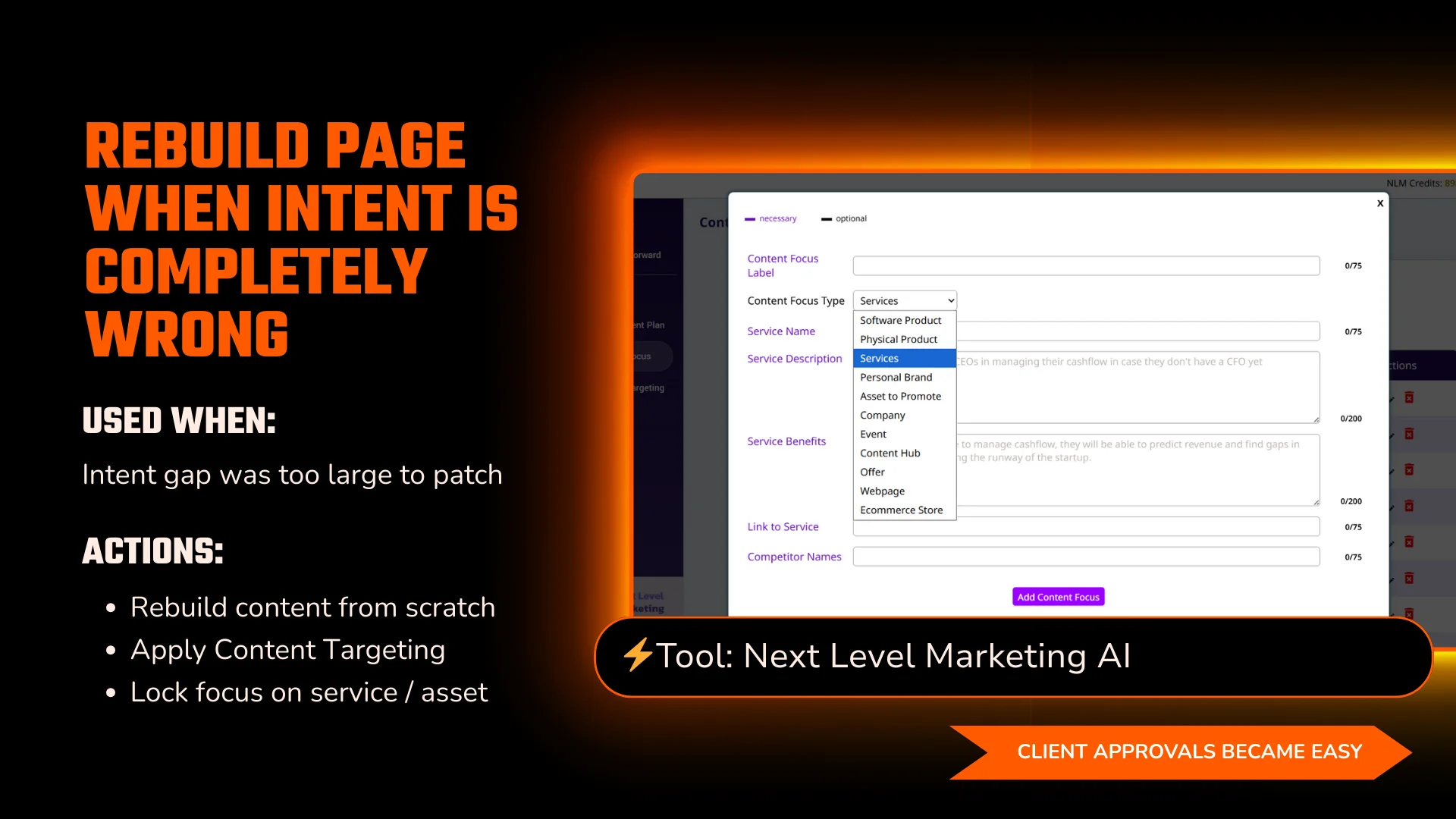
Option 2: Rebuild the content using Next Level Marketing AI
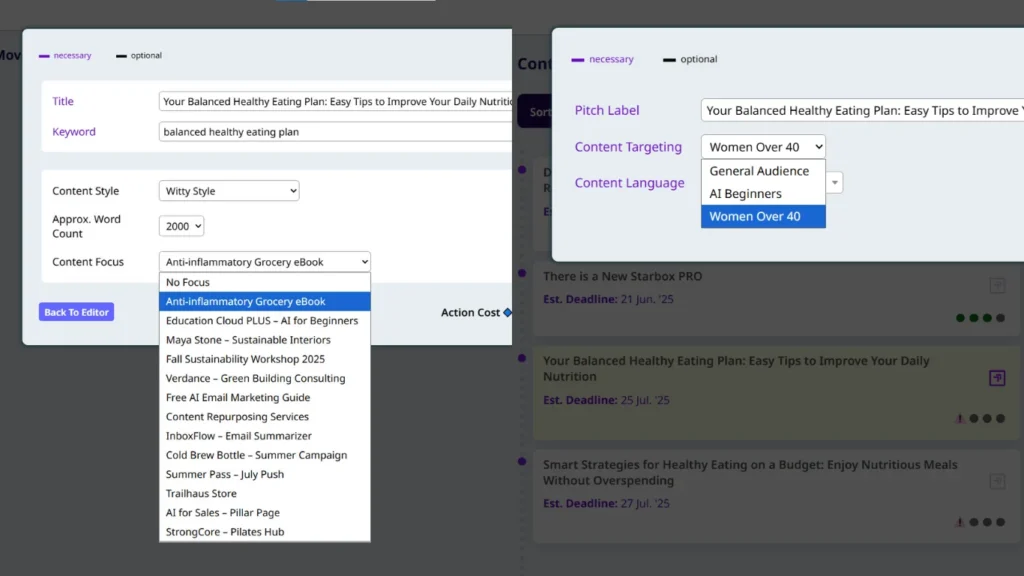
They used Next Level Marketing AI when the intent gap was too large to fix through optimization alone.
In these cases, they:
Time investment per page: ~15–30 minutes (only when necessary)
For each page, the agency presented clients with a clear choice: optimize or rebuild, along with effort and expected impact. This made approvals fast and straightforward.
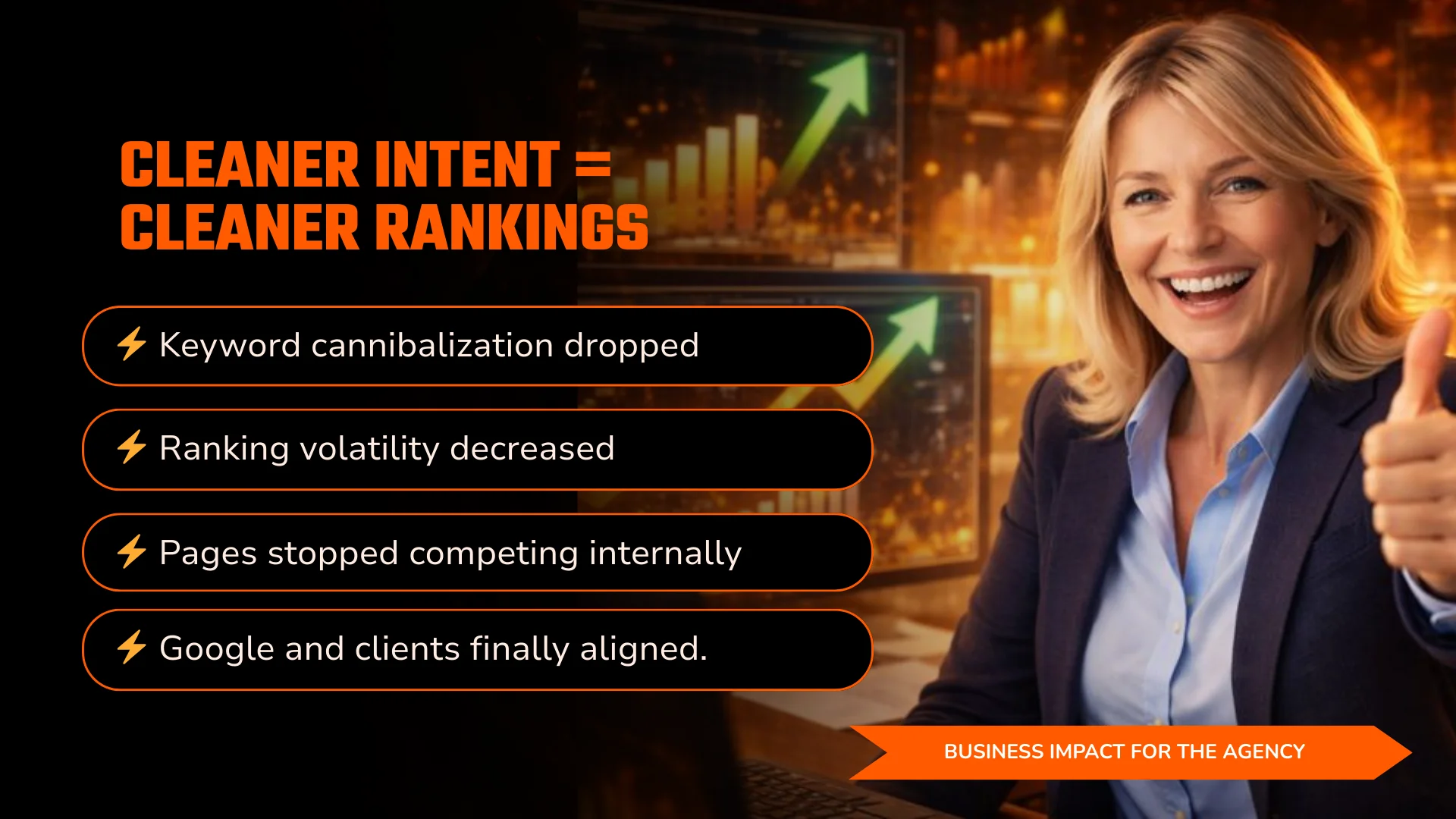
In short, Google began understanding pages the same way clients intended them to be understood.
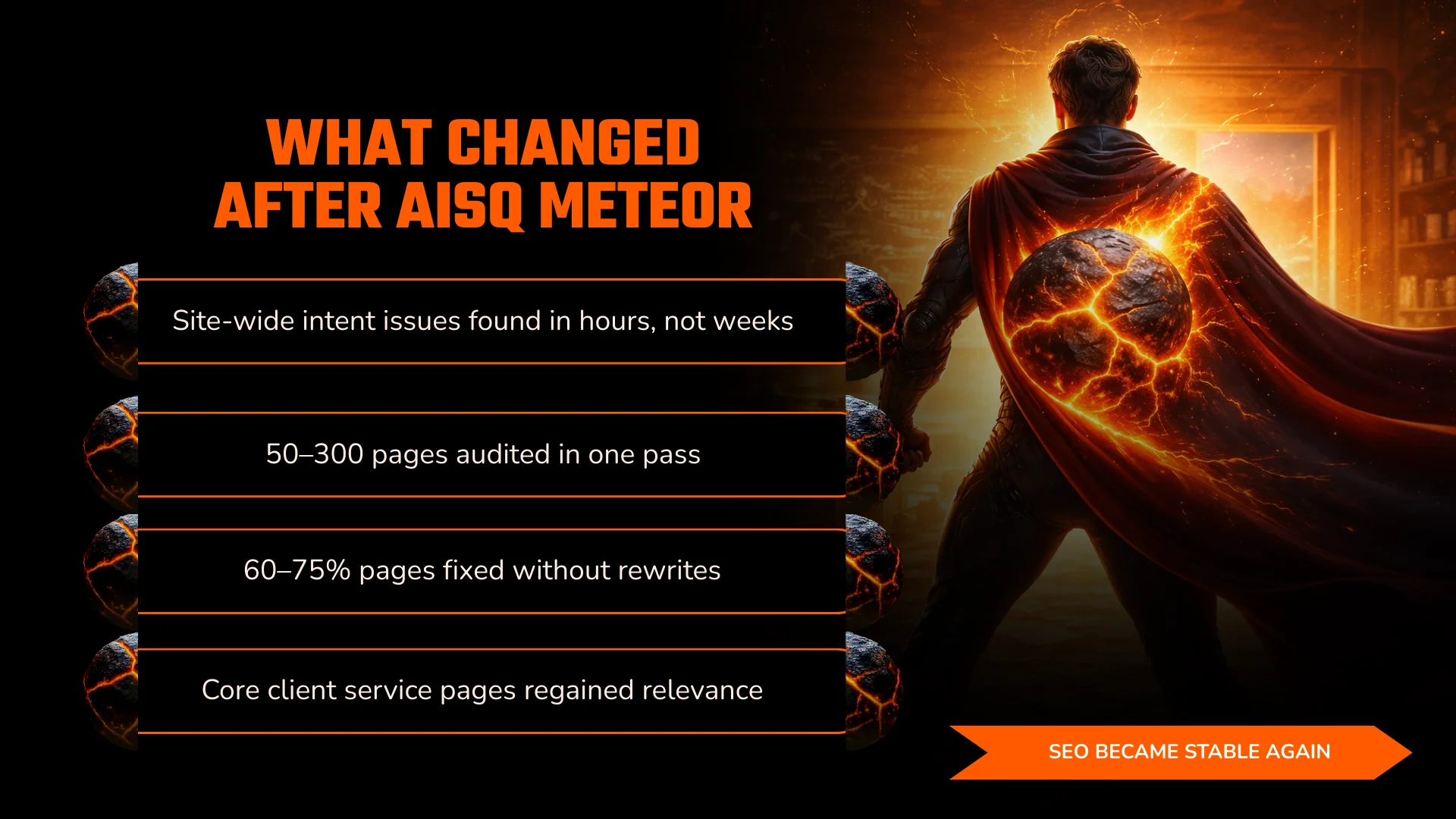
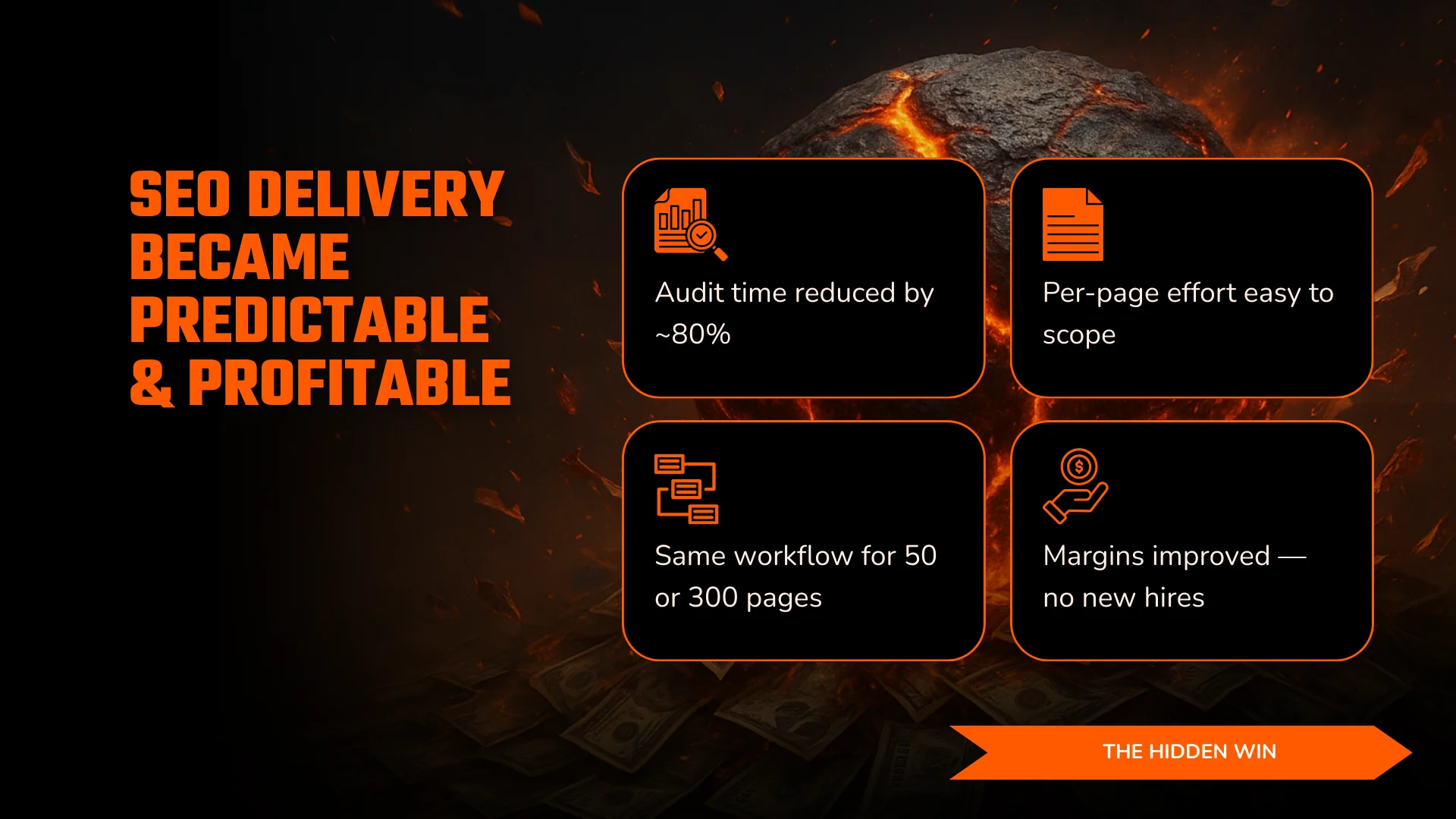
Audit and diagnosis time reduced by ~80%. Automated intent detection replaced manual page-by-page analysis.
Per-page fixes became predictable and easy to scope. Agency could estimate time and cost accurately instead of absorbing hidden effort.
SEO delivery became standardized across clients.
The same workflow can be applied whether a site has 50 pages or 300.
Margins improved without adding staff.
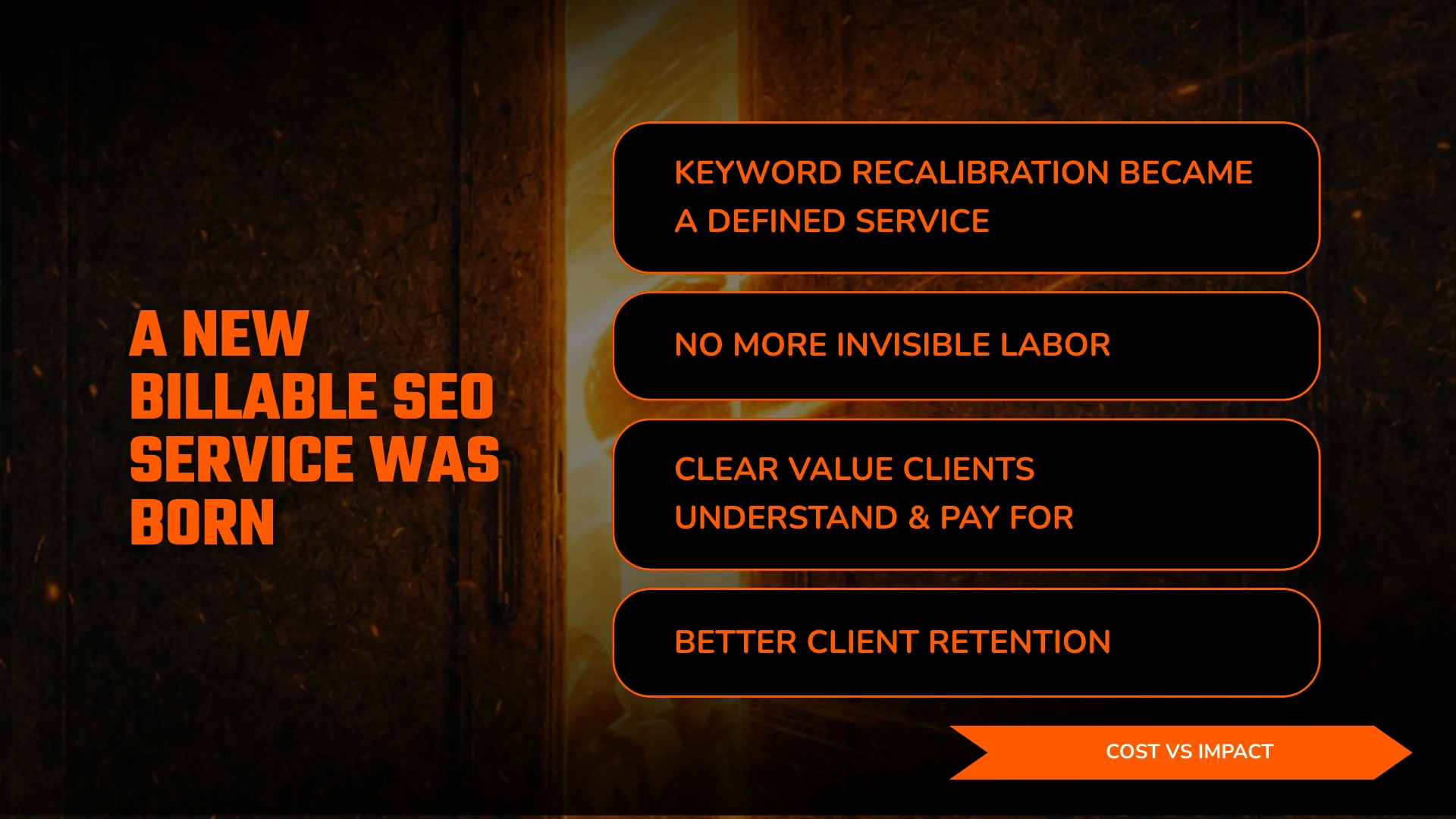
New billable SEO recalibration work emerged.
Keyword realignment became a defined service, not invisible labor.
Client retention improved. SEO performance became more predictable, reducing churn caused by “mysterious” ranking issues.
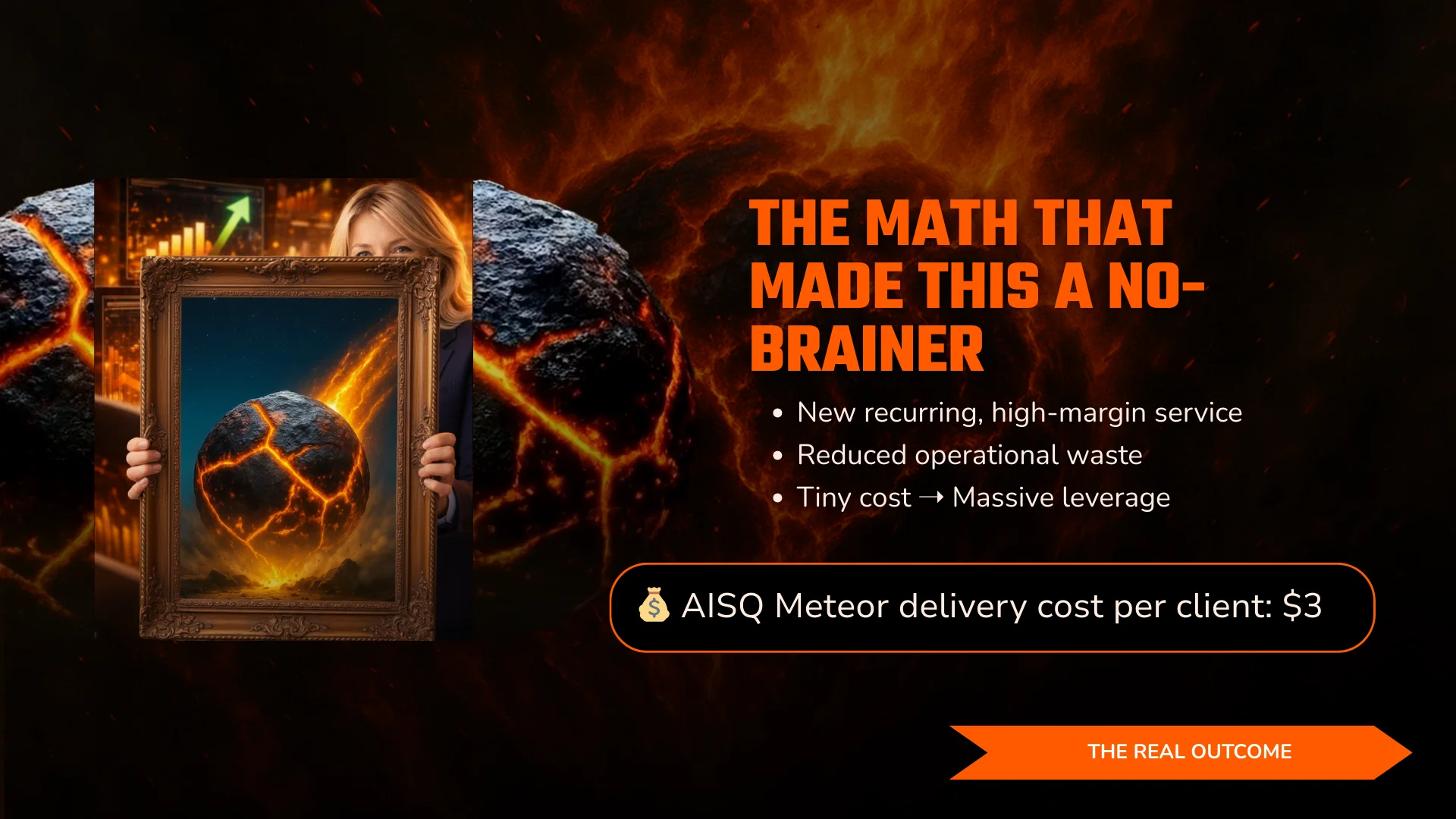
Keyword recalibration stopped being an invisible, frustrating problem and became a clear, repeatable, margin-safe SEO service.

Next/
Case Story
Free Now. Free Forever.