How Manufacturing Businesses Can Show Up in C
How Manufacturing Businesses Can Show Up in ChatGPT, Pe...


TL;DR
Generative Engine Optimization for Non-Profits is how you get AI tools like ChatGPT, Perplexity, Gemini, and Google AI Overviews to mention and recommend your organization when someone asks a question related to your cause. Unlike traditional search, these tools give one synthesized answer instead of a list of links, so if your organization isn’t the source being cited, you become invisible to that donor or volunteer. The fastest wins are: replace vague claims with specific numbers, name real sources, structure your content to answer clear questions, and make sure AI crawlers can access your site.
Generative engine optimization is the practice of shaping your content so AI systems can understand it, trust it, and quote it in their answers. It is defined as the nonprofit sector’s equivalent of SEO, but built for a world where people ask questions in full sentences and receive one answer instead of ten blue links.
This shift already affects how people find causes to support. Nearly 60 percent of Google searches now end without a single click, according to SparkToro’s 2024 zero click study. When someone asks an AI assistant “which food banks in my area accept walk-in donors,” the assistant answers directly, and it either names your organization or it names someone else. Gartner has predicted that traditional search volume will drop by 25 percent by 2026 as more people move their questions into chat-based tools. For a charity that depends on organic visibility to attract donors and volunteers, adopting Generative Engine Optimization for Non-Profits is the new front door.
Traditional SEO rewarded keywords, backlinks, and page rank. GEO rewards verified impact. An AI engine is not trying to rank your page. It is trying to decide whether it can safely repeat what your page says without embarrassing itself.
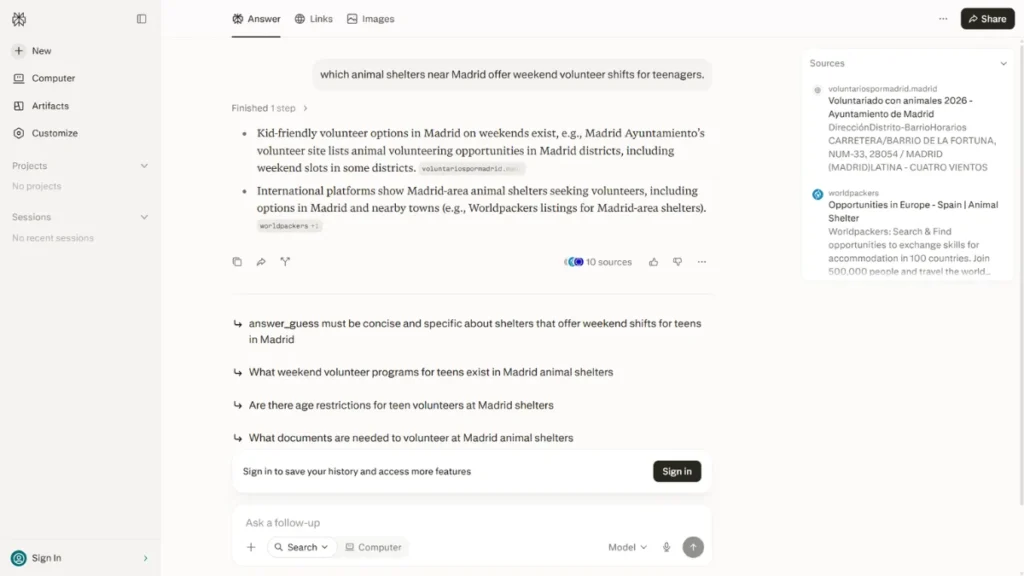
That means the currency has changed. A donor page that used to rank well because it repeated the phrase “animal shelter volunteer opportunities” ten times now needs to answer a much more specific question, such as “which animal shelters near Madrid offer weekend volunteer shifts for teenagers.” GEO rewards precision. SEO rewarded repetition.
Researchers from Princeton, Georgia Tech, and the Allen Institute tested nine different content strategies across thousands of AI queries to measure what increases the odds of being cited. Three findings matter most when implementing Generative Engine Optimization for Non-Profits:
Citing authoritative sources raises citation rates by roughly 40 percent. Instead of writing “poverty is rising in our region,” name the report. Say a specific United Nations study or a national statistics office confirmed the trend, and link to it. AI systems cross check claims, so naming your source signals that you can be trusted too.
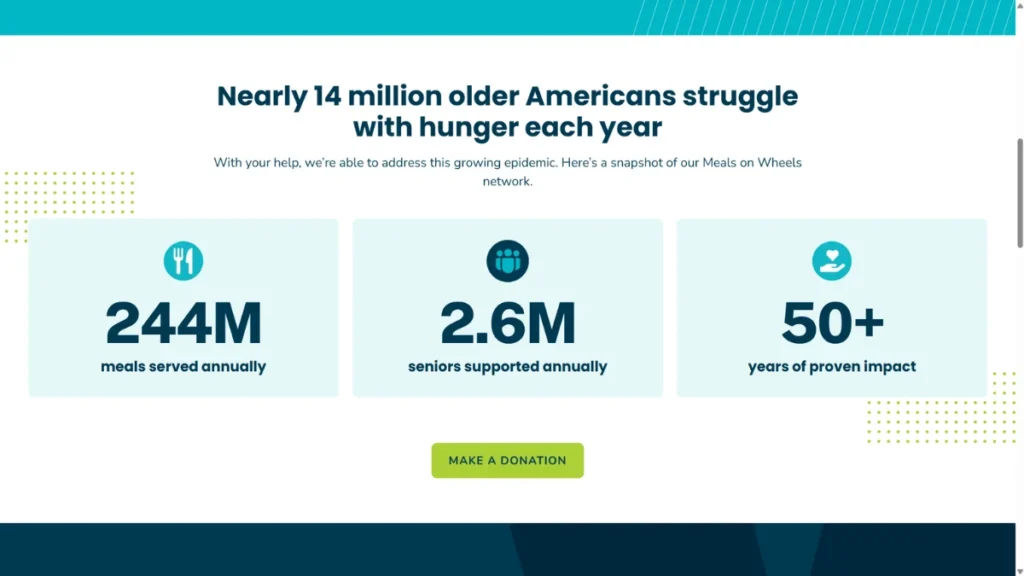
Including specific statistics raises citation rates by roughly 37 percent. “We help many people” tells an AI system nothing worth repeating. “We provided 43,000 meals across 12 counties in 2024” is a fact it can quote. Whenever you describe impact, attach a number, a date, and a place.
Adding expert quotations raises citation rates by roughly 30 percent. A quote from your program director, medical lead, or founder, attributed by name and title, signals real world expertise. This is part of what AI systems weigh when judging Experience, Expertise, Authoritativeness, and Trust, often shortened to EEAT.
The same research found a warning sign too: keyword stuffing your mission statement actually lowers your AI visibility by about 10 percent. Write for the person reading it. The AI engine is reading over their shoulder, not the other way around.
The biggest gain came from stacking methods. Combining a compelling story with concrete statistics raised citation odds by about 48 percent. A single impact report that pairs a real story, a real number, and a named source does more work than three separate pages that each do one thing alone.
| Habit | Why it matters for a nonprofit | What to actually do |
|---|---|---|
| Answer the question first | AI engines pull the first clear sentence of a section into their summary | Open every page section with a direct answer, then explain |
| Replace vague claims with numbers | “Many families” is not citable, “312 families in 2025” is | Pull real figures from your annual report onto your web pages, not just into a PDF |
| Name your sources | AI engines cross reference claims against known institutions | Link to the actual study, government data set, or watchdog report you’re citing |
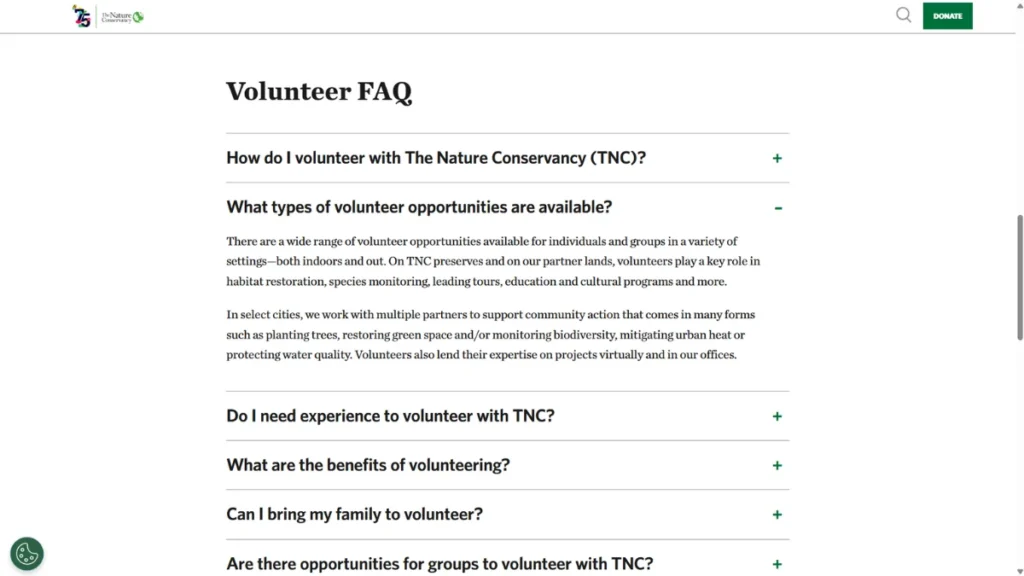
| Build a real FAQ page | Long tail questions are how people actually talk to AI tools | List the exact questions donors and volunteers ask, phrased the way they’d ask them |
| Add named experts | Authorship builds trust signals AI systems look for | Give your program leads a short bio with credentials on your team page |
| Use structured data | Schema markup tells AI crawlers what kind of organization you are | Add NonprofitOrganization, FAQ, and Event schema to your site |
| Allow AI crawlers | A blocked crawler means an invisible mission | Check your robots.txt file and confirm GPTBot, PerplexityBot, ClaudeBot, and Google Extended are not blocked |
Keep paragraphs short, two to four sentences, one idea each. AI systems chunk content into small pieces before deciding what to quote, so dense paragraphs that mix five ideas together rarely get picked. A good test is whether each sentence would still make sense if someone read it completely out of context, since that is essentially what an AI engine does when it pulls a single line into its answer.
Use headings phrased the way a real person would type a question into ChatGPT or Google. “What is your mission” performs better than “Our Mission” as a heading, because it mirrors how people actually search. Follow each heading with a direct answer in the first sentence or two, then add supporting detail underneath.
Put your most important information in plain text on the page itself, not locked inside a PDF annual report. AI crawlers read HTML far more reliably than scanned documents. If your strongest statistics are buried on page 14 of a PDF, an AI engine may never see them.
Finally, add a “last updated” date to your major pages, and reference specific time periods in the text itself, such as “as of Q2 2026.” AI systems weigh recency, and a page that clearly signals it reflects current information is more likely to be trusted over one with no date at all.
Yes. Blocking AI crawlers such as GPTBot, ChatGPT User, PerplexityBot, ClaudeBot, or Google Extended does not protect your organization, it simply removes you from the conversation. If a donor asks an AI assistant which environmental nonprofits are active in their region, and your site has blocked the bots, the assistant will recommend the organizations that did allow the crawl instead of yours.
You can allow these crawlers to read your public content while still restricting access to internal or proprietary research through your robots.txt file. Executing Generative Engine Optimization for Non-Profits requires keeping these public access doors open.
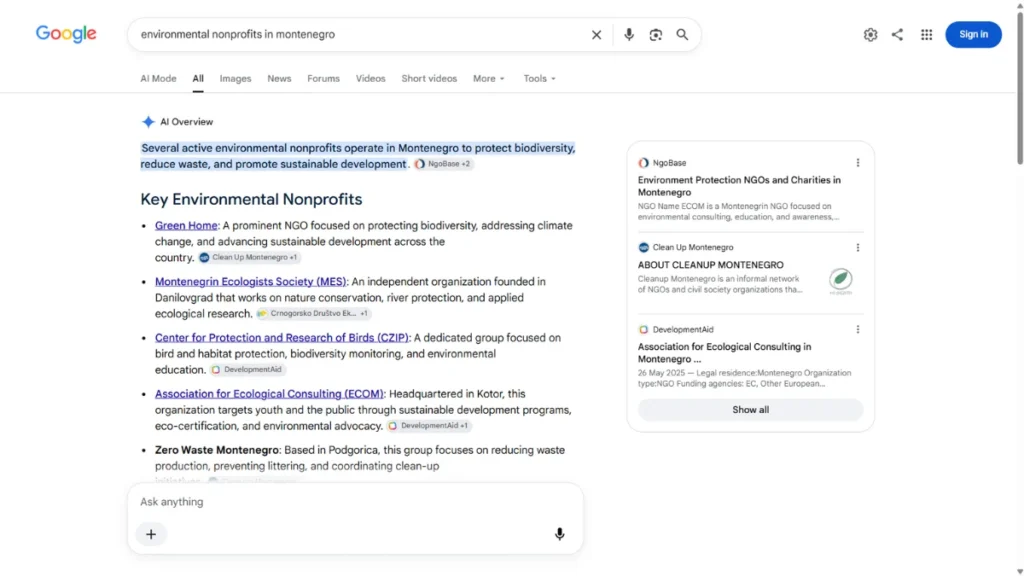
What is generative engine optimization in simple terms? Generative engine optimization means writing and structuring your website so AI tools like ChatGPT, Gemini, and Perplexity can find, trust, and quote your content when someone asks a related question.
Do we need a developer to do GEO for our nonprofit? No. Most of the highest impact changes are writing changes: adding real numbers, naming sources, answering questions directly, and updating your FAQ page. A communications or program staff member can make most of these edits directly in your existing website editor.
How is GEO different from getting an AI Overview badge or a featured snippet? Featured snippets and AI Overviews are outcomes, not strategies. GEO is the underlying practice of writing clear, well sourced, well structured content that increases the odds of being the source an AI system chooses to summarize or cite, across any AI powered search tool, not just Google.
Should we prioritize GEO over traditional SEO? Treat GEO as an extension of SEO rather than a replacement. A well structured, fast, mobile friendly site with clean metadata still matters. GEO adds the layer of specificity, sourcing, and direct answers that AI systems look for on top of that foundation.
How often should we review our GEO strategy? Quarterly is a reasonable rhythm for most small and mid sized nonprofits. AI search engines update their citation logic frequently, so review your top pages, refresh your statistics, and confirm your crawlers are still allowed every few months rather than treating this as a one time project.
What is the single highest impact change we can make this month? Take your three most visited pages, find every vague claim on them, such as “we help many people” or “our programs make a difference,” and replace each one with a specific number, date, and source. This one change touches structure, specificity, and trust all at once.

Gateway to AI Adoption. This is the Future of Marketing.

How Manufacturing Businesses Can Show Up in ChatGPT, Pe...
Generative Engine Optimization for Finance: How to Show...
AISQ Progress Update #9 – One-Click Internal Links, a...