Day 6 AEO GEO Journey to ChatGPT Recommendati
Day 6 AEO GEO Journey to ChatGPT Recommendations You...


TL;DR Generative Engine Optimization (GEO) is the practice of structuring your content so AI tools like ChatGPT, Perplexity, Gemini, and Google’s AI Overview can find it, trust it, and cite it directly in their answers. For finance businesses, GEO rests on three pillars: a clearly verifiable business entity, strong experience-and-credentials signals (E-E-A-T), and content that answers real client questions in plain, specific language. Below is a step-by-step guide, written for beginners, with no technical background required.
If you run a financial advisory firm, an accounting practice, a lending business, or an insurance agency, the way people search for answers is changing fast. Fewer people type a question into Google and scroll through ten blue links. Instead, they ask ChatGPT, Perplexity, Gemini, or Google’s AI Overview a question and get one direct answer, often naming just two or three sources. If your business isn’t one of those sources, you’re invisible in that moment, even if your website ranks well in traditional search.
This is where Generative Engine Optimization, or GEO, comes in. GEO is the practice of shaping your content so AI tools can find it, understand it, and confidently recommend it. Google itself describes GEO and its cousin term AEO (answer engine optimization) as work “specifically focused on improving visibility in AI search experiences”, and notes that, from its perspective, this is still fundamentally SEO, just applied to a new kind of results page. The good news: GEO doesn’t require a developer or an agency retainer. It mostly requires clear writing, verifiable credentials, and a bit of structure.
GEO means writing and structuring content so an AI system can lift it, quote it, and trust it enough to name your business as the source. Traditional SEO was about ranking a page high on a results list. GEO is about becoming the answer itself.
A useful comparison: a search engine used to work like a librarian pointing you to the right shelf. An AI answer engine works more like a knowledgeable friend who already read the books and is telling you what they learned. You want to be one of the books that friend actually read, remembered, and trusted enough to repeat.
| Traditional SEO | GEO | |
|---|---|---|
| What it optimizes for | A ranked position on a results page | Being cited or quoted directly in an AI-generated answer |
| What “success” looks like | Clicks and traffic | Citations, mentions, and AI-referred visits |
| What the user sees | A list of links | One synthesized answer, with a few named sources |
| What content needs | Keywords, backlinks, technical SEO | All of that, plus clarity, specificity, and verifiable credentials |
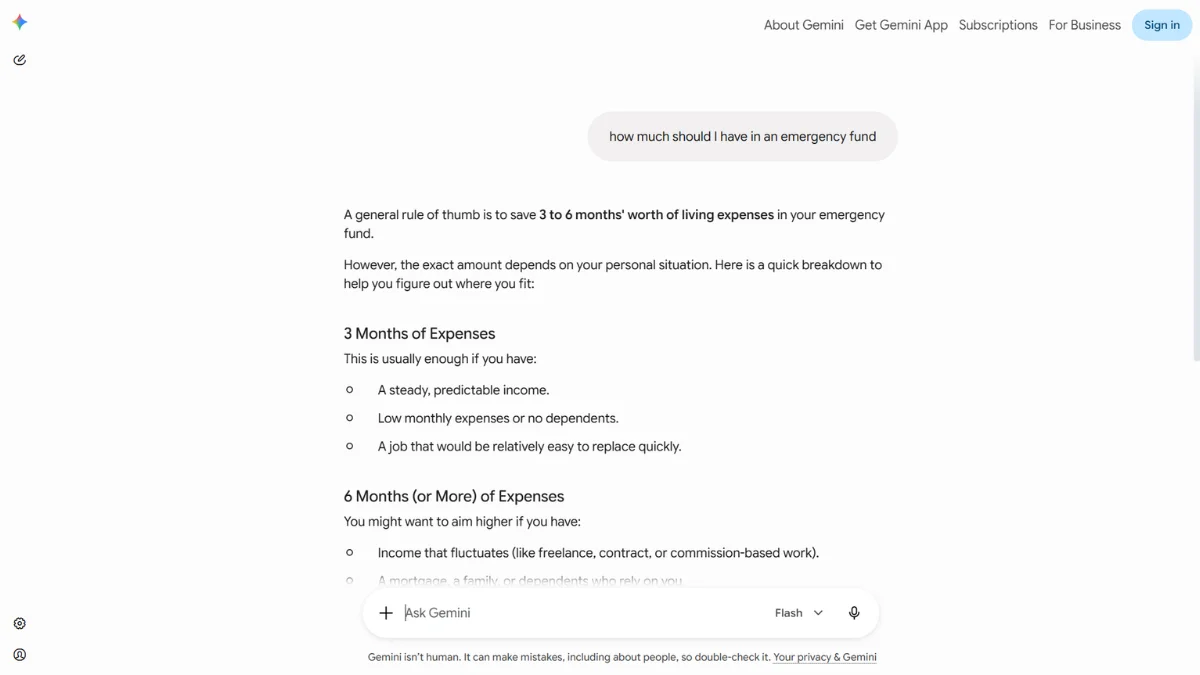
People researching money questions ask very specific things: “how much should I have in an emergency fund,” “what’s the difference between a Roth IRA and a traditional IRA,” “what credit score do I need for a mortgage.” These are exactly the kind of questions AI tools are built to answer directly, and finance is a category where AI systems apply extra scrutiny before they’ll cite a source, because bad financial information can cause real harm.
That scrutiny cuts both ways. Research from the AI visibility firm Brandlight has found that the overlap between top-ranking Google pages and the sources AI tools actually cite has fallen from roughly 70 percent to under 20 percent, meaning ranking well on Google no longer guarantees you’ll be the source an AI names. If a competitor answers these questions clearly, with real credentials behind them, and you don’t, the AI will likely quote them and never mention you, even if your advice is just as sound or your rates are better.
Visibility is also not permanent once earned. Research from AirOps found that only about 30 percent of brands remain visible in an AI’s answer to the same question asked twice in a row, and just 20 percent stay visible across five consecutive runs. This is part of why GEO is described as ongoing maintenance, not a one-time fix.
Before an AI tool decides whether to trust and quote you, it first has to determine who you actually are. This is called establishing your entity, and in finance it’s the single most important thing to get right before anything else.
Your business name, address, phone number, and hours need to match exactly across your website, Google Business Profile, LinkedIn company page, Better Business Bureau listing, and any financial directory you appear in.
Your website should have a clear About page listing:
If you’re a registered investment advisor, insurance agency, or similar, that registration information should be easy to find and should match public records exactly.
E-E-A-T stands for experience, expertise, authoritativeness, and trustworthiness. It matters more in finance than in almost any other industry, because bad financial advice can seriously harm someone. AI systems apply extra scrutiny to money topics for exactly this reason, so this deserves effort ahead of formatting or keyword choices.
Practical ways to build it:
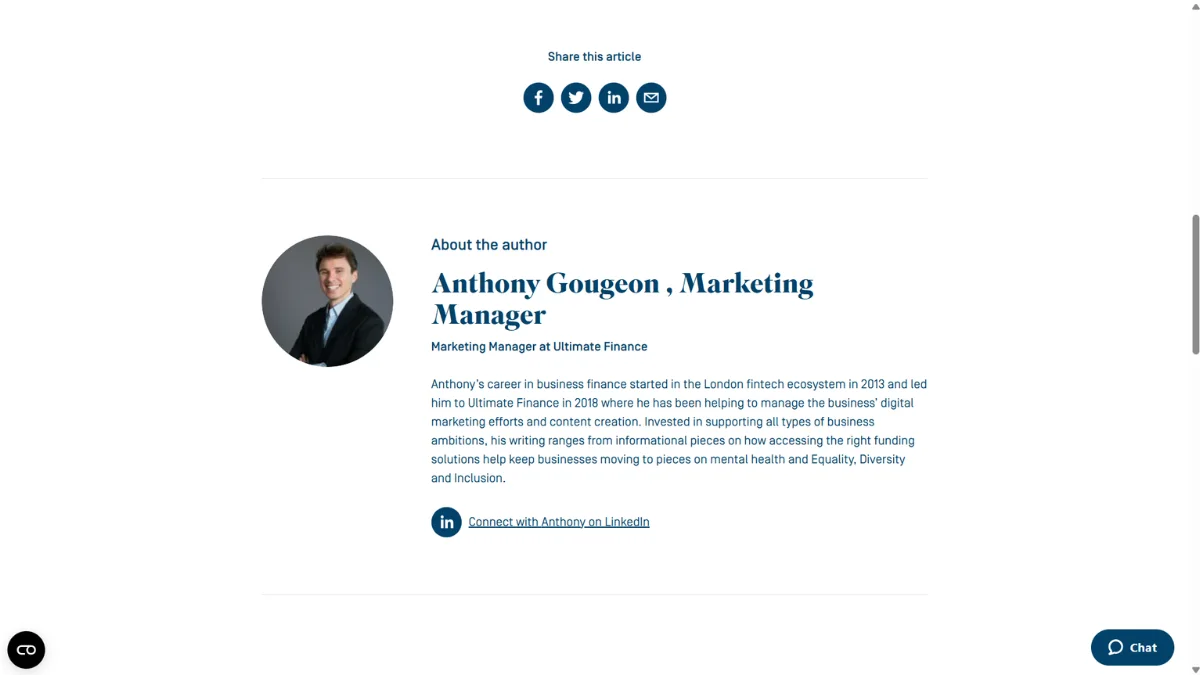
Every credential you display, and every credible mention of your business elsewhere on the web, adds evidence that you’re a source worth citing.
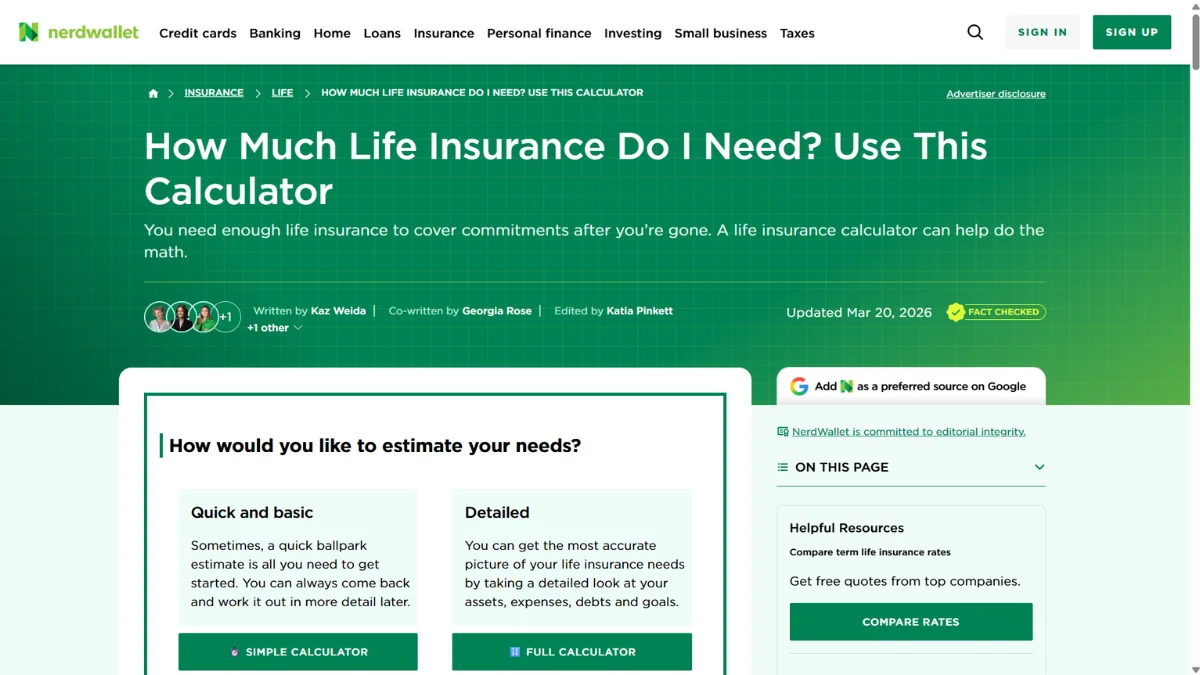
Once the trust foundation is in place, focus on presentation. AI tools favor content that gets to the point fast. If someone asks “how much life insurance do I need,” don’t open with three paragraphs about your firm’s mission. Open with the direct answer, for example: a common guideline is 10 to 15 times annual income, though the right amount depends on debts, dependents, and existing savings. Then explain the reasoning underneath.
A simple test: write each page like you’re answering a question from a client sitting across your desk, not like you’re writing a brochure.
Instead of “Retirement Planning Services,” use “How Much Do I Need to Retire?” or “When Should I Start Contributing to a 401(k)?” AI tools are essentially matching questions to answers, so headings phrased as questions make that match easier, and they help human visitors scan faster too.
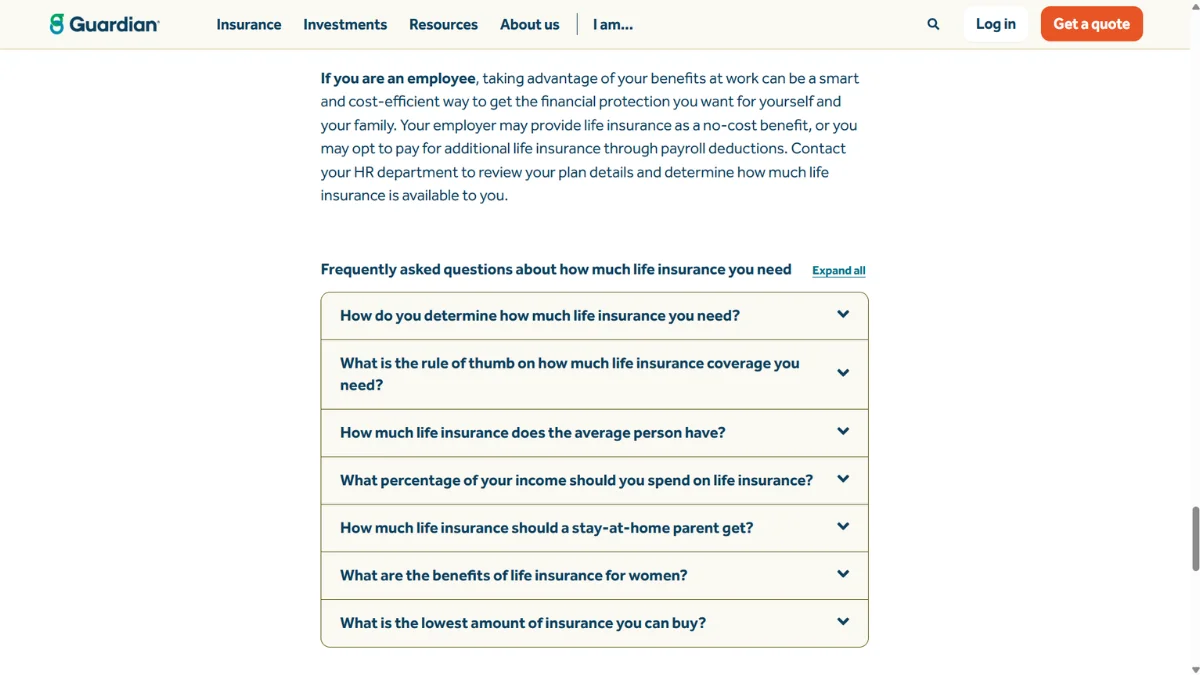
A short FAQ block at the bottom of a service page, blog post, or homepage is one of the highest-leverage things you can do. List five to eight real questions clients actually ask in meetings or over the phone, and answer each one in two or three plain sentences.
Vague content gets skipped; specific content gets quoted. Instead of “our rates are competitive,” write “our current fee is 1 percent of assets under management, with a $50,000 minimum account size.” Instead of “we help you save for retirement,” write “a 30-year-old contributing $500 a month at a 7 percent average return could have roughly $1 million by age 65.” Where a figure depends on current rates or regulations, date it, so both readers and AI tools know it’s current.
Most people searching for financial guidance aren’t finance professionals, that’s exactly why they’re searching. Avoid jargon, or explain it the moment you use it. If you use a term like “amortization,” follow it with a plain explanation: the process of gradually paying off a loan through payments that cover both interest and principal.
Interest rates, tax brackets, contribution limits, and regulations change often, sometimes annually. Recency is a measurable ranking factor for AI citations: research from Seer Interactive found that roughly 85 percent of AI Overview citations came from content published within the last two years, and that recently updated content appeared in AI answers about 4.3 times more often than stale content. Review key pages whenever rates or limits change, and date any page referencing specific figures.

Clear headings, short paragraphs, bullet points, and numbered lists help AI tools parse your page, no code required. Break up walls of text, especially for multi-step processes like applying for a loan or opening an account. This also just makes your site easier to read on a phone between meetings.
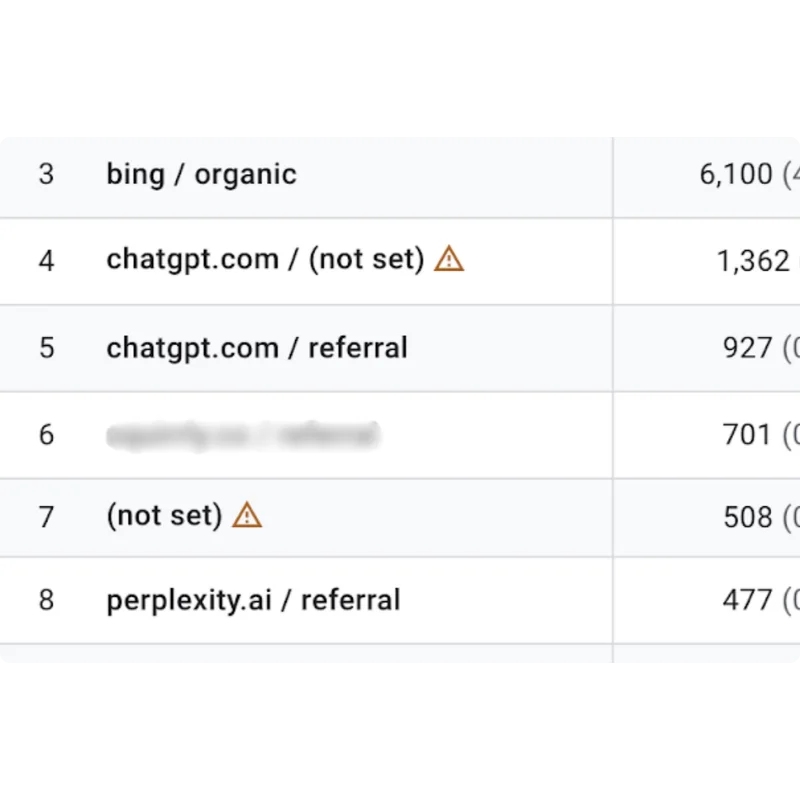
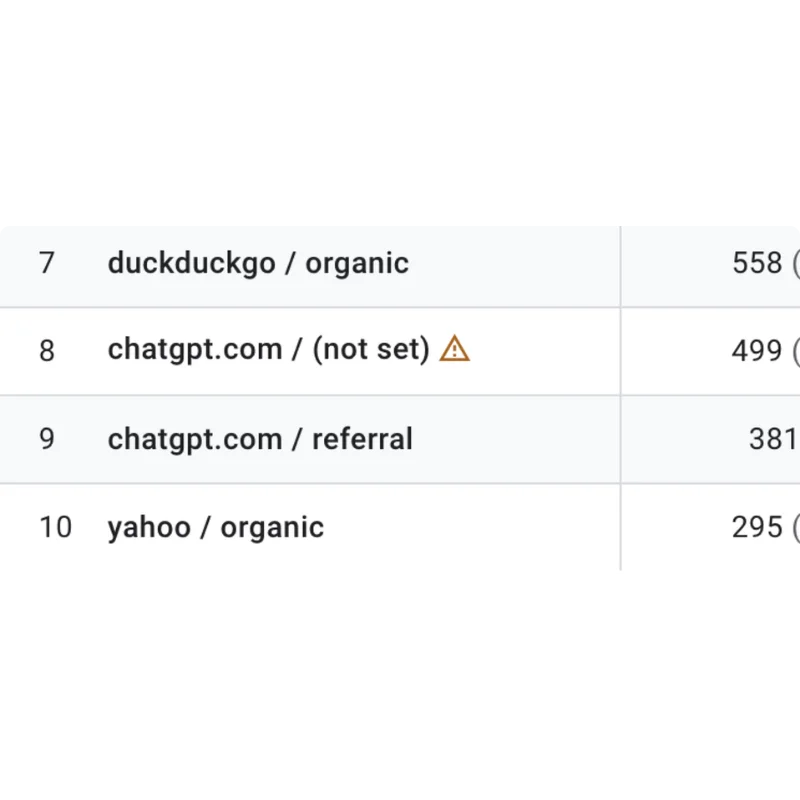
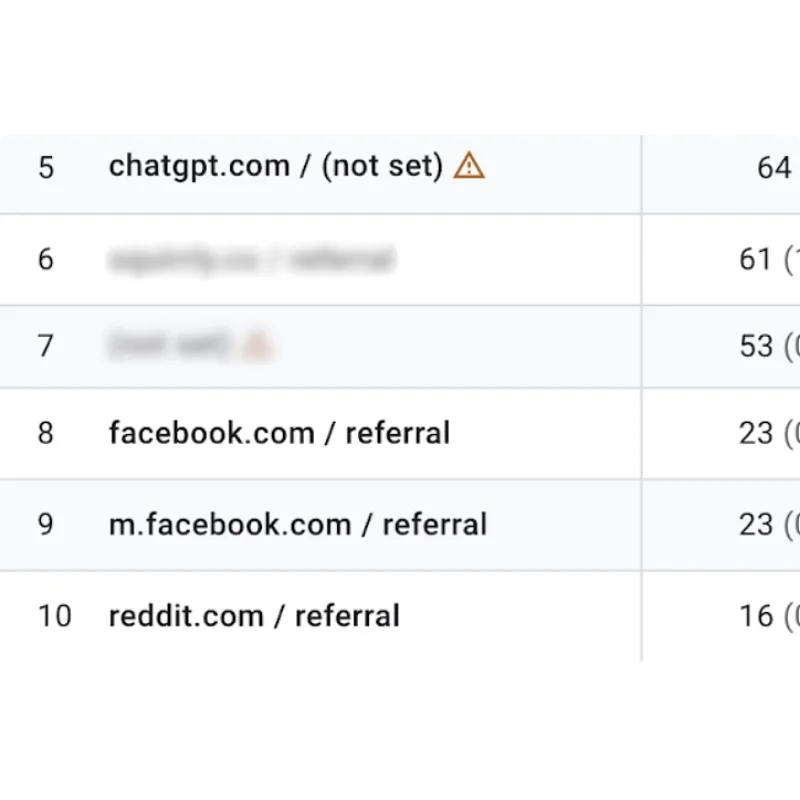
If your website has Google Analytics installed, go to Reports → Acquisition → Traffic acquisition. This report breaks down visitors by session source and medium. Look for names like chatgpt.com, perplexity.ai, gemini.google.com, or copilot.microsoft.com. Traffic from these sources means a real person asked an AI tool a question, received your business as part of the answer, and clicked through.
Check this report monthly and track the trend line rather than the raw number, early on it may just be a handful of visits. It’s also worth noting that AI-referred traffic still makes up a small share of overall web traffic industry-wide (Conductor’s 2026 benchmarks put it around 1 percent, with ChatGPT responsible for the large majority of that referral traffic), so modest numbers early on are normal, not a sign it isn’t working.
Beyond analytics, ask the major AI tools questions a potential client would ask about your services and area, and see if you come up. Watch for clients mentioning “an AI told me about you” or “I asked ChatGPT and it recommended you,” and track these the way you’d track any other referral source.
Is GEO different from SEO? No, GEO builds on SEO fundamentals and adds techniques specific to how AI systems select and cite sources. Google has stated that optimizing for generative AI search is still, at its core, optimizing for the search experience.
How long does GEO take to show results? There’s no fixed timeline, since AI platforms evaluate and update citations continuously rather than on a fixed crawl schedule. Track progress through AI-referral traffic and direct testing of AI tools rather than expecting an overnight change.
Do I need to rewrite my whole website? No. Start with your most-requested service page, add a strong FAQ section, answer the core question at the top, and keep your business information consistent everywhere online. Expand from there.
Does GEO replace the need for a Google Business Profile? No, for local finance businesses, your Google Business Profile is often the first and most trusted source AI tools reference. It works alongside your website, not instead of it.

Gateway to AI Adoption. This is the Future of Marketing.