🏆 AISQ /Radio Billboard: Top 5 Software La
🎧 AISQ /Radio Billboard – Week 2 Results Are In (1...


How to estimate the real audience size when ChatGPT, Claude, and Perplexity mention you — and why most marketers are dramatically undervaluing this channel
There’s a number missing from your dashboard.
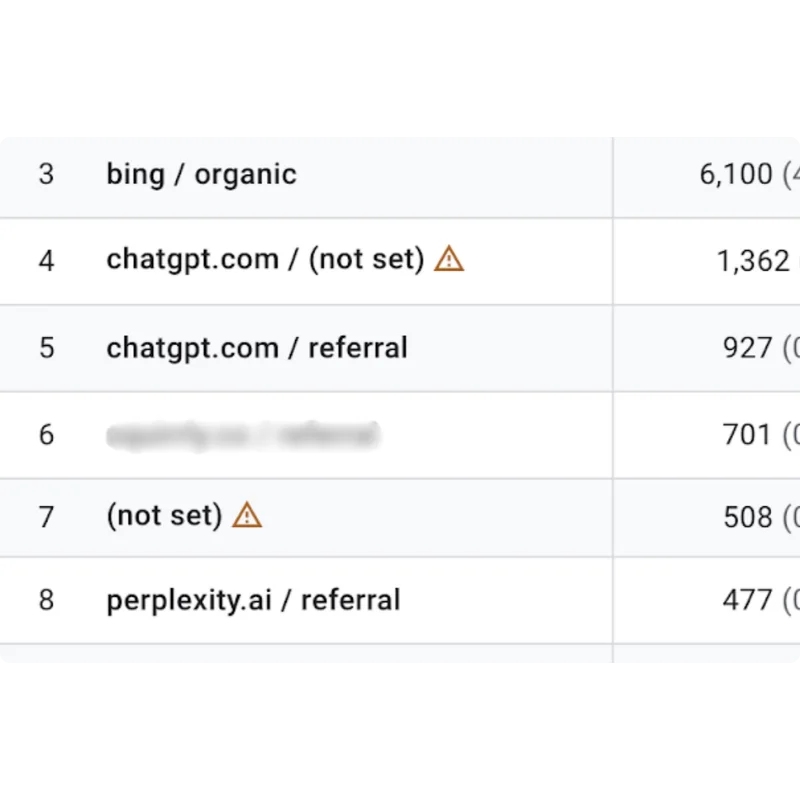
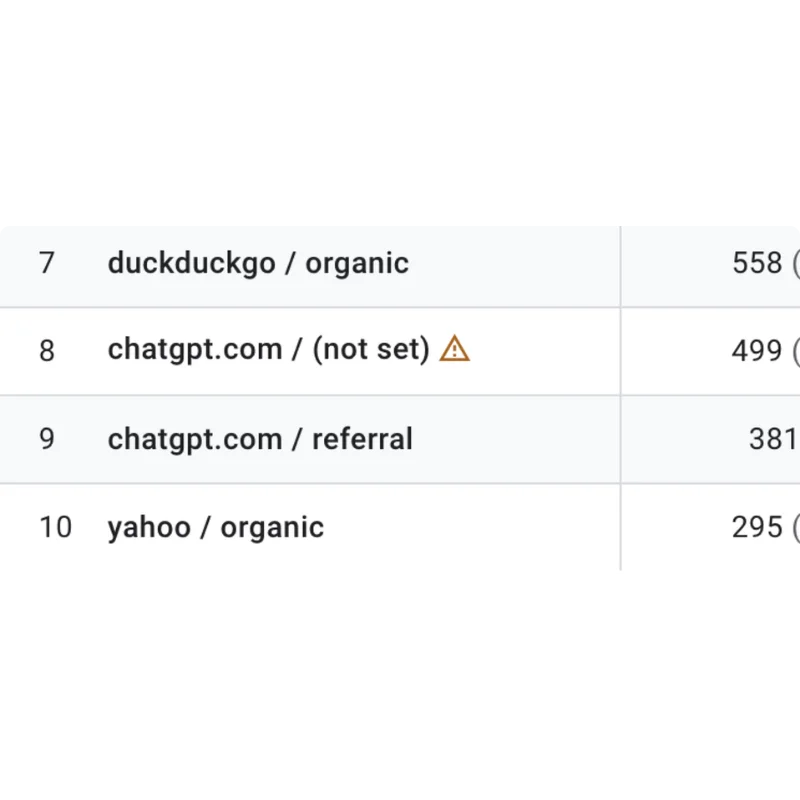
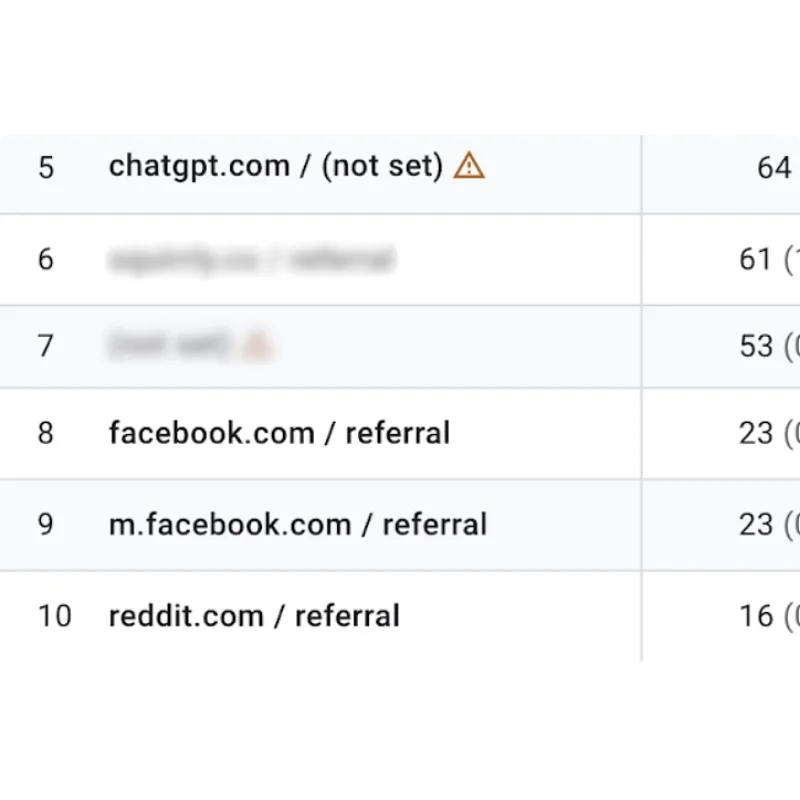
You can see how many visitors arrived from ChatGPT last month. You can see what they converted at, how long they stayed, how many pages they read. What you can’t see is the much larger number of people who encountered your brand inside an AI tool, read what it had to say about you, formed an impression — and never clicked.
That audience is real. It’s measurable in aggregate. And for most sites, it’s somewhere between 14 and 33 times larger than the traffic your analytics actually captures.
This post explains how that estimate is built, which sources it draws on, and what it means for how you think about AI visibility as a marketing channel.
When someone asks ChatGPT, Perplexity, or Claude a question that returns a citation or brand mention, they have a choice: click through to the source, or take the answer at face value and move on.
Most move on.
Bain & Company’s February 2025 research found that 80% of consumers now rely on zero-click results for at least 40% of their searches. Conductor and Superlines, analyzing AI search behavior across multiple industries in 2025, put the zero-click rate for AI search sessions even higher — around 93%.
That means only roughly 3–7% of the people who see your brand mentioned in an AI-generated answer actually visit your site.
Flip that around: if 1,000 people arrived at your site from AI tools last month, somewhere between 14,000 and 33,000 people saw your brand mentioned inside those tools without clicking. Your analytics captured the 1,000. It missed the other 13,000–32,000.
Cloudflare publishes detailed data on how AI platforms behave as crawlers and referrers, and it’s one of the most revealing datasets for understanding this gap.
In July 2025, Cloudflare reported that for every single visitor Anthropic (Claude) referred back to a website, its crawlers had already visited approximately 38,000 pages. That ratio had fallen dramatically from 286,000:1 in January — reflecting Claude’s rapid growth as a referral source — but it still illustrates how lopsided the relationship is between AI consumption of web content and AI delivery of traffic.
Perplexity showed a different pattern: a crawl-to-refer ratio that spiked above 700:1 in late March 2025, meaning for every visitor it sent to a site, it had crawled over 700 pages. This ratio is lower than Claude’s but was actually increasing through mid-2025, suggesting Perplexity was crawling more aggressively relative to the traffic it returned.
These ratios don’t map directly to brand impressions — crawling is about training and indexing, not just answering queries. But they give you a structural sense of how much these platforms consume versus how much they refer, and they corroborate the zero-click research: the content goes in; the traffic mostly doesn’t come out.
The 14×–33× multiplier comes from combining two inputs:
1. Estimated click-through rate by platform
Blending the zero-click research across ChatGPT, Claude, and Perplexity, with platform-specific adjustments:
2. Inversion of the CTR
If the CTR is 5%, then 95% of people who saw the citation didn’t click. For every 1 person who arrived, 19 didn’t. That’s a 20× multiplier at 5% CTR. At 7% CTR, it’s roughly 14×. At 3%, it’s roughly 33×. The 14–33 range reflects the uncertainty across platforms and query types.
The math is simple: total exposures = arriving visitors ÷ CTR
So 1,000 arriving visitors ÷ 0.05 = 20,000 total in-tool exposures.
A common objection: if someone didn’t click, did the impression really count?
The evidence suggests yes — and for a specific reason. People asking questions in AI tools are in active research mode. They’re not passively scrolling a feed. When an AI mentions your brand in answer to a question like “what’s the best tool for X” or “which companies do Y”, the user is evaluating. They may not click today. But they’ve been introduced to your brand in a context of explicit, relevant intent.
Seer Interactive’s 2025 analysis of 42 organizations found that brands cited in AI responses earn 35% more organic clicks and 91% more paid clicks than non-cited brands for the same queries. The zero-click impressions don’t vanish — they appear to prime users who then seek the brand out through other channels.
This is analogous to how branded search works after a display or TV campaign: the impression drives a later, higher-intent action that looks organic in attribution.
AI-referred traffic converts dramatically better than organic search traffic. Seer Interactive found ChatGPT traffic converting at 15.9% versus Google organic at 1.76%. Perplexity at 10.5%, Claude at 5%.
At first glance this seems to cut against the “you’re missing a large audience” argument — if the people who click are already highly qualified, maybe the zero-click impressions are less valuable?
The counterargument: the high conversion rate reflects the research intent of AI users in general, not just the ones who clicked. The people who saw your brand and didn’t click are likely in the same research frame of mind. They may come back through branded search, through a direct visit, or through a future AI interaction where your brand is already familiar. The zero-click impressions are seeding a pipeline that converts downstream.
Most analytics setups treat AI referral traffic the way they treat any other referral: a visit either happened or it didn’t. That framing misses most of the channel’s actual reach.
A more complete measurement approach tracks three layers:
Layer 1 — Traffic (what your analytics already shows) Sessions from ChatGPT, Perplexity, Claude, and Gemini, separated into a custom channel group in GA4. This is the baseline.
Layer 2 — Estimated total exposures Divide Layer 1 by an assumed CTR (5–7% is a reasonable blended starting point) to estimate how many people saw your brand in-tool. This is a model, not a measurement — but it gives you an order-of-magnitude figure that’s more realistic than ignoring the zero-click majority entirely.
Layer 3 — Citation share and mention tracking How often does your brand appear in AI-generated answers for your key queries? Tools for tracking this are still early, but manual testing — running 30–50 representative queries monthly across ChatGPT, Perplexity, and Claude — gives you a directional read on your share of voice in AI results.
Taken together, these three layers give you a much clearer picture of AI as a brand channel, not just a traffic channel.
These estimates involve real uncertainty. A few important notes:
CTR varies enormously by query type. A query that asks for a list of tools (“best CRM for startups”) produces a different click pattern than a query asking for an explanation (“how does X work”). Brand mentions in tool-comparison answers probably see higher CTRs than brand mentions in informational answers.
Platform behavior is changing fast. Claude’s crawl-to-refer ratio fell 87% between January and July 2025. ChatGPT’s referral volume grew 206% in 2025. The multipliers described here reflect a snapshot; the actual numbers are moving quickly.
The Cloudflare data covers crawling, not answering. A crawled page may never appear in an answer. The 38,000:1 ratio is a structural indicator of the imbalance, not a direct measurement of brand impressions per referral.
Zero-click research varies by study. The 93% figure comes from Conductor/Superlines analysis; Bain’s 80% figure measures something slightly different (reliance on zero-click in at least 40% of searches). Both point in the same direction but aren’t the same measurement.
If you’re evaluating AI as a marketing channel purely on referral traffic, you’re looking at roughly 3–7% of the actual audience that’s encountering your brand through these platforms.
The channel is growing fast — AI referral sessions grew 527% between January and May 2025 across a dataset of 400+ sites. It converts better than organic search. And it’s generating brand impressions at a scale that doesn’t show up in your GA4 dashboard.
Getting cited in AI responses isn’t just a traffic play. It’s closer to a reach play with unusually high-intent audiences. The measurement framework to capture that reach doesn’t exist off the shelf yet, but the estimation methodology described here is a reasonable starting point for putting a number on what you’re actually reaching.
Sources: Bain & Company (February 2025); Cloudflare blog, “The crawl-to-click gap” (October 2025); Conductor / Superlines AI Search Statistics (2025–2026); Seer Interactive AI Traffic Analysis (June 2025); SE Ranking AI Traffic Research Study (September 2025); Statcounter AI Chatbot Referrals (April 2026); Superprompt.com analysis of 400+ sites (August 2025).
🎧 AISQ /Radio Billboard – Week 2 Results Are In (1...
Boost AI Indexing and AI Search Engine Discovery The...
Are you ready to transform your business with the power...