American Airlines Is Now Using AI to Hold Pla
American Airlines is turning to artificial intelligence...


Artificial intelligence is not simply reducing website traffic. It is fundamentally changing how information is discovered, consumed, and acted upon.
Traditional search engines sent users directly to articles, documentation, and other pages that answered specific questions. AI platforms increasingly perform that research themselves. They read deeper pages, compare information, and summarize the findings inside a conversation. When users finally click, they are often sent to the company’s homepage rather than the page the AI used as evidence.
This creates two distinct jobs for a website. Deep pages must provide clear, structured, citation-worthy information for AI systems. Homepages, product pages, internal search tools, and other conversion surfaces must serve visitors who arrive already informed and ready to act.
The article argues that most websites are still designed for the traditional search economy, even though the data shows that the click economy is shrinking. Businesses that learn how to become trusted sources for machines, and then convert the humans those machines send, will be best positioned for the next phase of the web.
AI-generated answers are sharply reducing traditional search clicks. When Google displays an AI summary, users click a traditional result only 8% of the time, compared with 15% when no summary is shown. Links cited inside AI answers receive clicks only about 1% of the time.
Publishers are experiencing major traffic losses. Google Search page views across Chartbeat’s publisher network fell 34% between December 2024 and December 2025. Small publishers lost approximately 60% of their search referral traffic over two years, while Business Insider’s organic search traffic declined 55% over three years.
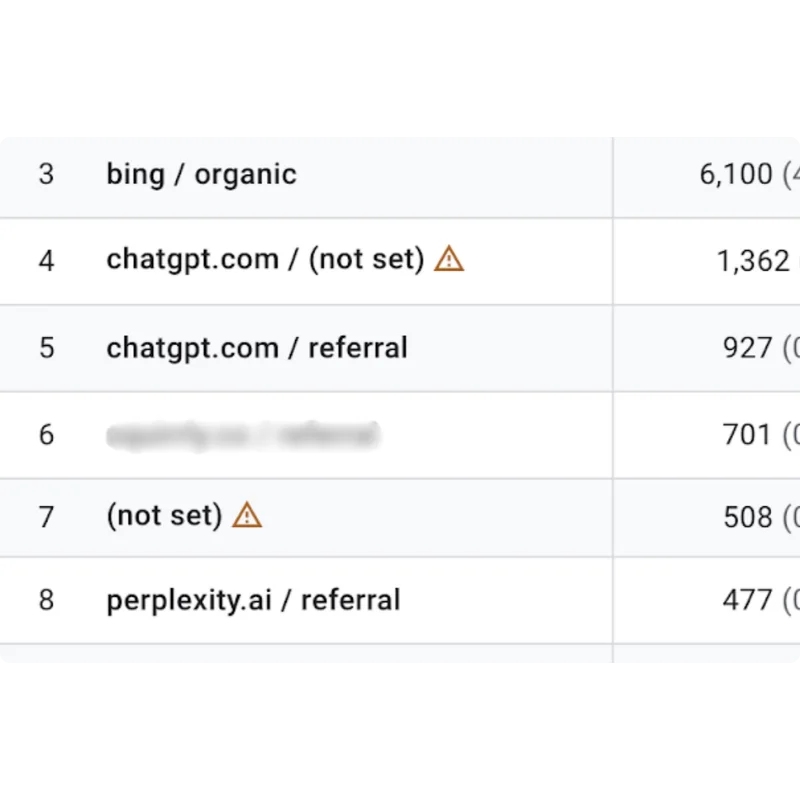
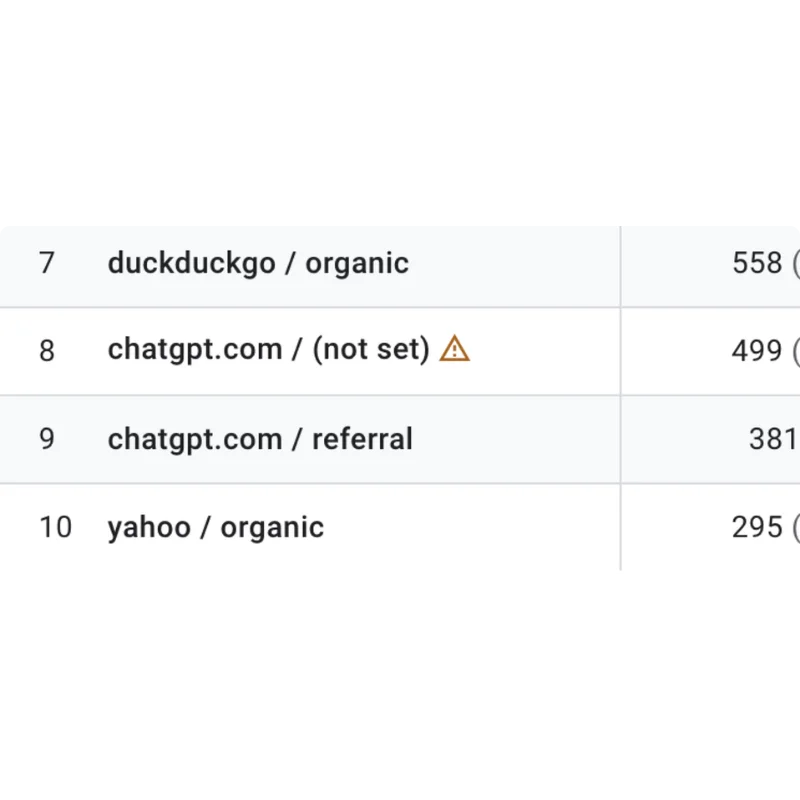
AI systems are consuming more web content even as they send fewer visitors. By May 2026, 6.8% of all ChatGPT answers included live web citations, more than five times the previous share. In travel-related answers, the figure reached 22.6%.
Organic visibility and AI visibility remain connected. AI platforms rely on live pages and search indexes to construct answers. When a company loses organic visibility, AI systems may also become less likely to discover and use its content.
AI referrals are increasingly landing on homepages. After ChatGPT introduced more prominent brand links, its referral traffic rose 157% in one week. At the same time, the share of visitors landing on homepages increased from roughly 25% to nearly 60%.
AI-recommended brands gain an advantage beyond the initial click. Brands recommended by AI receive between two and four times as many subsequent visits as competing brands that were not recommended.
Advertising is moving inside AI conversations. Sponsored results appeared in 26% of U.S. desktop ChatGPT conversations in June 2026, up from 14% one month earlier. Most appeared after the second prompt and were targeted using the accumulated context of the conversation rather than a single keyword.
Google’s search advertising dominance is under pressure. Google’s share of U.S. search advertising is projected to fall below 50% in 2026. At the same time, Google is expanding AI Overviews and conversational AI Mode, effectively disrupting its own traditional click-based business.
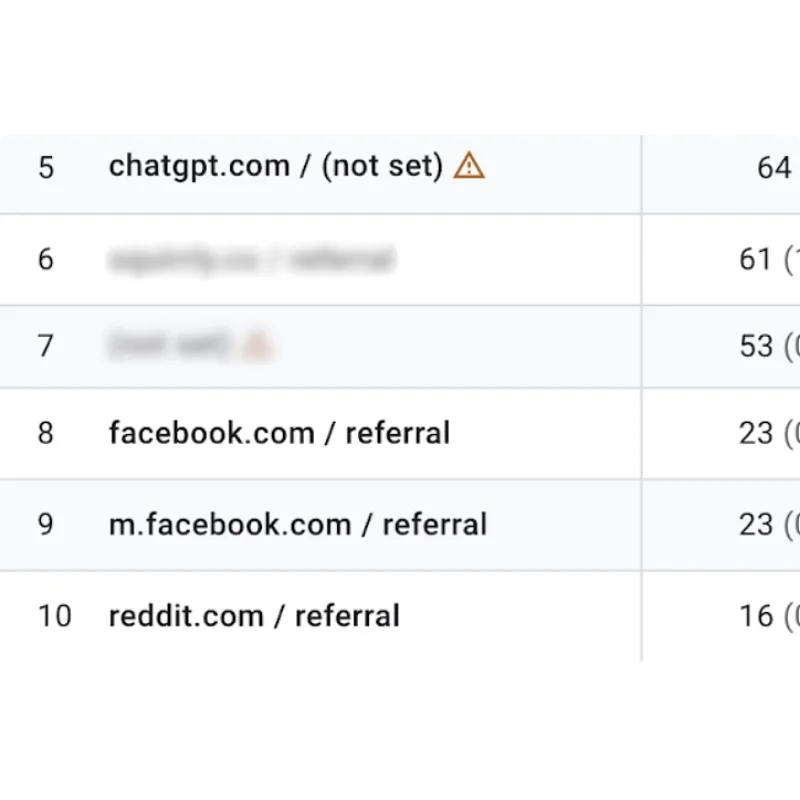
The pages AI cites are not necessarily the pages people visit. Similarweb found that 65% of ChatGPT-cited URLs are located two or three folders deep within a website, while 58.8% of referral traffic lands on homepages.
Internal search is becoming an acquisition channel. An analysis of 6.77 million AI-referred sessions found that 28.8% of ChatGPT referrals landed on internal site-search pages, an area many publishers have historically neglected.
Traditional SEO performance does not perfectly predict AI citations. Ahrefs found that 28.3% of ChatGPT’s most-cited pages had no Google organic visibility. It also found that 67% of the most-cited sources, including Wikipedia, were sources marketers could not directly influence.
“AI answers are built on an information supply chain whose funding model, ad-supported clicks, is collapsing primarily because of AI answers.”
“The chatbot does the researching and comparing; the human arrives ready to act.”
“The traditional search engine keyword auction is being replaced by something new: paid placement inside a conversation, targeted on accumulated context.”
“The pages AI systems cite and the pages AI systems send humans to are different pages doing different jobs.”
“They already know you have what they need, get them to it as quickly as possible.”
“The click economy is not coming back.”
“The entities that learn to be quoted by machines and to convert the humans those machines send will own whatever the web becomes next.”
Websites now need separate citation and conversion strategies. Deep articles, documentation, comparisons, research, and benchmark pages should be built to help AI systems extract trustworthy evidence. That means using specific claims, clear headings, descriptive URLs, and easily understood structures.
The homepage must serve a more informed visitor. An AI-referred visitor may already understand the company, product, or solution before arriving. The homepage no longer needs to begin every conversation from zero. It should quickly confirm relevance and direct the visitor toward the appropriate product, service, tool, or next step.
Internal search deserves serious investment. As AI sends more visitors to websites at the brand level rather than the exact answer page, people will need fast ways to locate the information or solution discussed in the conversation. Internal search is becoming part of the acquisition experience rather than merely a navigation utility.
Publishers face a difficult economic transition. AI platforms depend on publisher content while simultaneously reducing the clicks that fund its creation. The article leaves open the question of whether conversational advertising or another emerging model can sustainably support the information layer AI systems rely upon.
Brands may benefit more than individual content pages. Value is increasingly routed toward recognizable entities rather than isolated articles. Being recommended by an AI system can influence future visits and purchasing behavior even when the original source page receives little or no traffic.
Search advertising is entering a new competitive era. OpenAI, Google, Microsoft, and Perplexity are competing not only for users, but also for the advertising demand that historically funded the open web. Contextual placement inside conversations could weaken Google’s long-standing keyword-auction advantage.
Analytics practices must change. Businesses should compare AI citation data with AI referral logs to identify which pages machines use as evidence and which pages humans enter through. Treating these as separate datasets can reveal whether the website is prepared for the new discovery journey.
Ultimately, the article’s message is not that websites are becoming irrelevant. Their role is changing. Deep pages increasingly educate machines, while homepages and navigation systems convert the humans those machines influence.

American Airlines is turning to artificial intelligence...
Best ways to use Next Level Marketing AI are available ...
OpenAI has introduced Canvas, a new interface that allo...